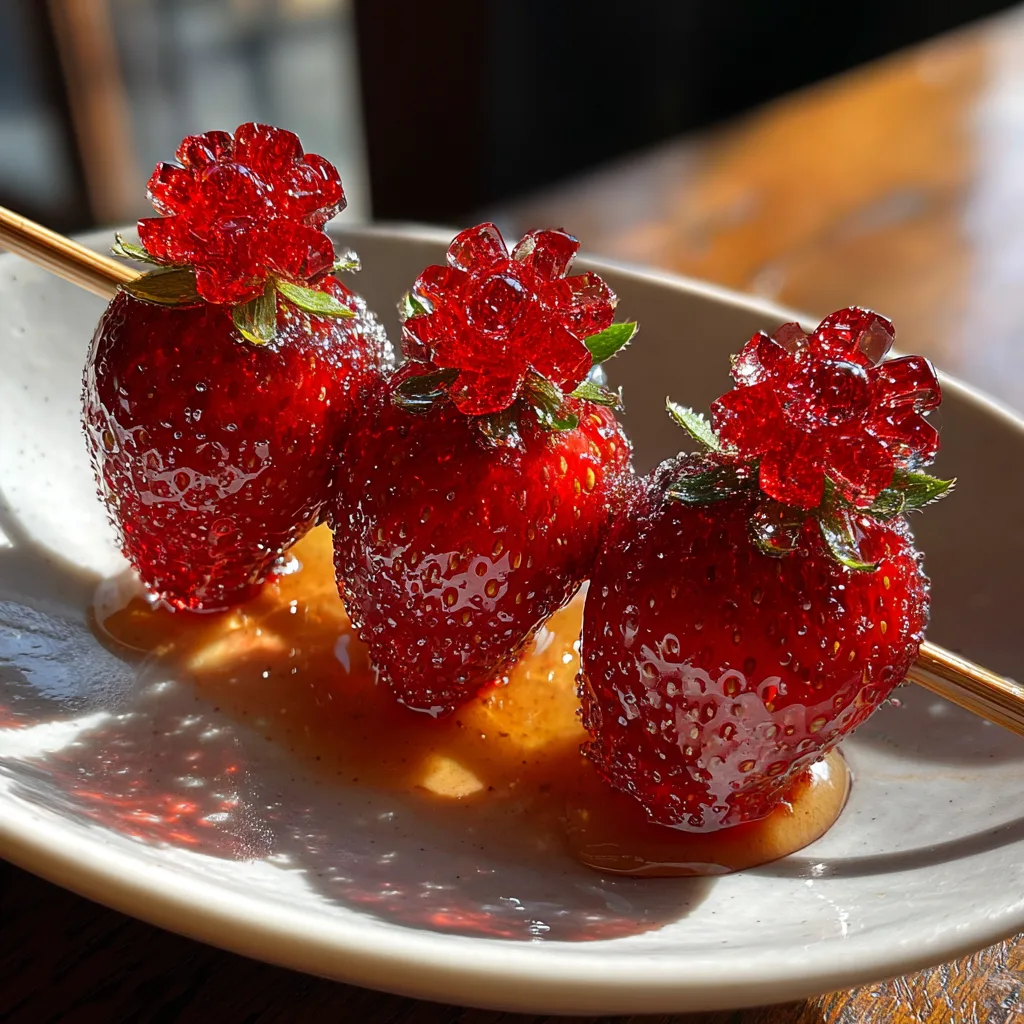
Strawberry Tanghulu Skewers
The Ultimate Strawberry Tanghulu Recipe: How to Make Crisp, Glossy Candied Fruit with a Sugar Flower
There is something inherently magical about food that shatters when you bite into it. If you have ever scrolled through social media and heard the sharp, satisfying crack of a glossy, glass-like coating giving way to a burst of sweet, juicy fruit, you have witnessed the allure of Tanghulu. This traditional Chinese street food has taken the culinary world by storm, captivating food lovers with its stunning visual appeal and unforgettable textural contrast. Today, we are taking this beloved treat to the next level by creating a stunning Strawberry Tanghulu adorned with a delicate, edible hard-sugar flower.
Whether you are looking to impress guests at a dinner party, recreate a viral food trend in your own kitchen, or simply treat yourself to a wildly delicious snack, this recipe will guide you through the process. Making candy at home can seem intimidating, but with the right techniques, a bit of patience, and an understanding of the science behind melted sugar, you will be producing bakery-quality candied fruit skewers in no time. Let us dive deep into the sweet, shattering world of traditional Tanghulu.
What is Tanghulu? A Brief History and Cultural Context
Long before it became an internet sensation, Tanghulu (also known as bingtanghulu) was a cherished wintertime snack in Northern China, particularly in Beijing. Its origins trace back hundreds of years to the Song Dynasty. According to folklore, an imperial concubine fell mysteriously ill, and the emperor’s physicians were baffled. A countryside doctor suggested a simple remedy: hawthorn berries candied in boiling sugar, to be eaten before meals. Miraculously, she recovered, and the prescription soon spilled out of the palace walls and into the streets, evolving into a beloved popular snack.
Traditionally, Tanghulu is made using Chinese hawthorn berries (shan zha), which have a tart, sour profile akin to crabapples. The tartness of the berry perfectly balances the intense, hard-crack sweetness of the sugar shell. Vendors thread the bright red fruits onto long bamboo skewers, dip them into a bubbling cauldron of molten sugar, and let the chilly winter air flash-freeze the coating into a pristine, glass-like shell. Today, while hawthorn remains classic, modern vendors and home cooks have expanded the repertoire to include strawberries, grapes, mandarin orange segments, kiwis, and even cherry tomatoes.
The Science of the Sugar Shell: Understanding the Hard Crack Stage
The success of Tanghulu relies entirely on sugar chemistry. When you boil sugar and water together, you are creating a sugar syrup. As the water evaporates, the concentration of sugar increases, and the temperature of the boiling syrup rises. To achieve the signature “shatter” of Tanghulu, the syrup must reach what confectioners call the “hard crack stage,” which occurs between 300°F and 310°F (149°C – 154°C).
If you dip your fruit too early (at the soft ball or hard ball stage), the coating will be sticky, chewy, and stick to your teeth—more like a caramel apple. If you heat the sugar past the hard crack stage, it will caramelize, turn brown, and eventually burn, resulting in a bitter flavor. Hitting that precise sweet spot ensures the sucrose molecules form a brittle, transparent glass structure upon cooling. Additionally, we avoid stirring the syrup once it boils; stirring encourages the sugar molecules to crystallize, which would turn your beautiful clear glass into a cloudy, grainy mess.
Why You Will Love This Strawberry Tanghulu Recipe
While standard Tanghulu is beautiful on its own, this specific recipe incorporates an elevated artistic element: a spun-sugar flower centerpiece at the top of the skewer. Here is why this recipe stands out:
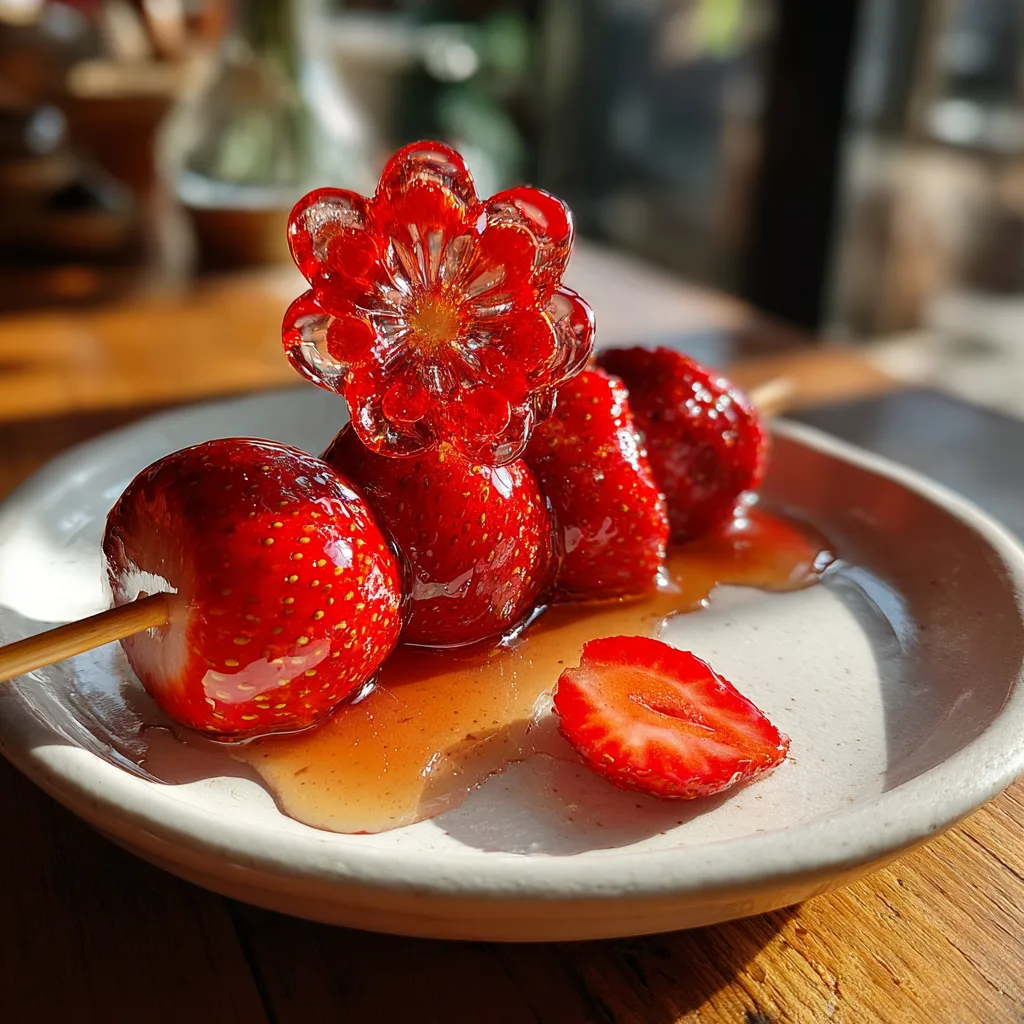
First, the visual impact is extraordinary. The clear sugar petals catch the light like stained glass, framing the bright red strawberry pieces in the center. It turns a humble street food into a gourmet showpiece. Second, the textural contrast is unmatched. The crisp, brittle snap of the sugar immediately yields to the soft, refreshing, and slightly tart juice of the fresh strawberry. It is an explosion of flavor and mouthfeel. Finally, it is surprisingly accessible. Despite its elaborate appearance, crafting the sugar flower utilizes the exact same syrup used for dipping the fruit, meaning no extra ingredients are required—just a little bit of technique.
Essential Ingredients
The ingredient list for Tanghulu is remarkably minimalist. The magic lies in the method, not a complex grocery list. Here is exactly what you need:
– 12 to 15 fresh, firm Strawberries (medium-sized work best)
– 2 cups Granulated White Sugar
– 1 cup Water
– 2 tablespoons Light Corn Syrup (Optional, but highly recommended to prevent crystallization)
– Ice (for the water bath)
Crucial Equipment for Candy Making
To ensure absolute success, gathering the right tools before you begin is essential. Candy making moves quickly once the sugar reaches temperature.
– Wooden skewers (6 to 8 inches long)
– A heavy-bottomed saucepan (light-colored interior if possible, so you can monitor the syrup’s color)
– A digital candy thermometer (the most important tool for consistent results)
– Parchment paper or a silicone baking mat
– A large bowl filled with ice water (for flash-cooling the sugar)
– Paper towels
Step-by-Step Instructions
1. Prepare and Dry the Fruit: Wash your strawberries thoroughly. This is the most critical preparatory step: dry the strawberries completely using paper towels. Even a single drop of water on the surface of the fruit will prevent the hot sugar from adhering and will cause the sugar shell to melt from the inside out. Remove the green hulls from the strawberries you intend to use for the center of the flowers, but you can leave the leaves on the skewered berries for a pop of color if desired.
2. Skewer the Fruit: Carefully thread three dry strawberries onto each wooden skewer. Push the skewer through the top center (stem end) straight down to the tip. Leave enough room at the bottom of the skewer for a handle, and leave a small gap at the very top of the skewer to attach your sugar flower later.
3. Prepare the Ice Bath and Workstation: Fill a large bowl with cold water and ice cubes. Set it right next to your stove. Lay out a sheet of parchment paper or a silicone baking mat on your counter. Have your prepared strawberry skewers ready to go.
4. Boil the Sugar Syrup: In your heavy-bottomed saucepan, combine the granulated sugar, water, and light corn syrup. Place the pan over medium-high heat. You may gently stir the mixture before it boils to ensure the sugar is saturated with water, but the moment it begins to simmer, remove your spoon and do not stir it again. Stirring causes crystallization.
5. Monitor the Temperature: Clip your candy thermometer to the side of the pan. Watch as the syrup bubbles. The water will evaporate, and the bubbles will become thicker and slower. You are looking for the thermometer to hit exactly 300°F (149°C). If you do not have a thermometer, you can drop a small amount of the syrup into a glass of ice water; if it instantly hardens into brittle threads that snap when you bend them, it is ready.
6. Dip the Skewers: As soon as the syrup reaches 300°F, remove the pan from the heat immediately to stop the cooking process. Working quickly, take a strawberry skewer and tilt the saucepan slightly to pool the syrup. Swirl the skewer in the syrup to coat the strawberries in a thin, even layer. Do not submerge them for more than a couple of seconds, or the hot sugar will cook the fruit and release juices, ruining the shell.
7. Flash Cool: Immediately after dipping, plunge the sugar-coated strawberry skewer into the ice water bath for 2 to 3 seconds. This shocks the sugar, setting it instantly into a hard, glossy glass shell. Shake off excess water and place the skewer on the parchment paper to dry completely.
How to Craft the Tanghulu Sugar Flower
This is where we turn a standard snack into a work of art. You will use the remaining hot sugar syrup in your pan to build the flowers.
1. Prep the Flower Center: Cut a small strawberry horizontally into thin, round slices. Place one slice flat on your silicone mat or parchment paper. This will be the center of your flower.
2. Draw the Petals: Using a metal spoon, carefully scoop up a small amount of the remaining hot, clear sugar syrup. Drizzle the syrup onto the parchment paper in the shape of rounded petals radiating outward from the strawberry slice center. Ensure the hot sugar touches the strawberry slice so it fuses together. Draw 5 or 6 petals to complete the blossom.
3. Let it Set: Allow the sugar flower to sit at room temperature for about 3 to 5 minutes until completely hard and cool to the touch.
4. Attach the Flower to the Skewer: Carefully peel the hardened sugar flower off the parchment paper. Dip the back center of the flower into any remaining warm syrup in your pot (or use a kitchen torch to slightly melt the back). Quickly press the sticky back of the flower onto the exposed top tip of your completed strawberry skewer. Hold it in place for a few seconds until it sets.
Expert Tips for the Perfect Crunch
Candy making can be finicky, but following these expert tips will help you avoid the most common pitfalls.
Dry Fruit is Non-Negotiable: I cannot stress this enough. If your fruit is wet, the sugar will slide right off, or the trapped moisture will dissolve your hard candy shell within minutes. After washing, let the fruit air dry, then pat it down meticulously with a dry towel.
Do Not Stir the Syrup: Once the mixture is on the stove and boiling, keep spoons away from it. If sugar crystals form on the sides of the pan, you can use a wet pastry brush to gently wash down the inside walls of the pot, preventing the crystals from falling into the syrup and ruining the batch.
Work Rapidly: Once the sugar hits 300°F, it will begin to cool and thicken the moment it is removed from the heat. Have your station completely set up before you start boiling. If the syrup gets too thick to dip, you can return it to low heat for a minute to loosen it up, but be careful not to caramelize it.
Thin Coats are Better: A thick layer of sugar might seem appealing, but it can be surprisingly difficult to bite through and might hurt your teeth. Aim for a quick, thin, elegant coating. It will shatter much more pleasantly in the mouth.
Flavor Variations and Fruit Substitutions
Once you master the basic Strawberry Tanghulu, the possibilities are endless. The technique applies to almost any firm fruit.
Green Grapes: Grapes are a fantastic alternative. Their naturally tight skins keep juices locked inside perfectly, and the sweet-tart green flavor profiles beautifully against the sugar. Cotton Candy grapes make for a particularly decadent treat.
Mandarin Oranges: Peeled mandarin orange segments offer a bright, citrusy burst. Ensure the white pith is mostly removed and the delicate membrane of the slice is not punctured before dipping.
Spiced Sugar: For an adult twist, try steeping a slice of fresh ginger or a star anise pod in the water and sugar mixture as it boils, removing it just before you dip the fruit. This adds a subtle, warming aromatic note that elevates the entire dish.
Serving and Storing Suggestions
Tanghulu is a dessert that demands to be eaten fresh. It is not a make-ahead treat. The moisture from the fresh fruit inside the shell will naturally begin to break down the sugar coating over time.
For the best experience, serve the Tanghulu within 30 minutes to an hour of making it. The shell will be at its crispiest, and the fruit will still be cool and refreshing. If you absolutely must store them for a short period, keep them uncovered in the refrigerator on a piece of parchment paper. Do not put them in an airtight container, as the trapped humidity will melt the sugar glass instantly, turning it into a sticky syrup. Furthermore, never freeze Tanghulu; freezing will cause the fruit to expand and crack the shell, and upon thawing, the fruit will turn mushy and weep juices, completely destroying the dessert.
Frequently Asked Questions (FAQs)
Why is my Tanghulu sticky and chewy instead of crunchy?
Your sugar syrup did not reach the hard crack stage (300°F). Without a candy thermometer, it is easy to pull the sugar off the heat too early. Next time, wait for the bubbles to slow down and use the ice water drop test to ensure brittle threads form.
Why did my sugar syrup turn brown?
You overcooked the syrup, moving past the hard crack stage and into the caramelization stage. Once it starts turning amber, it happens fast. Pull it off the heat immediately when it hits 300°F.
Why did my clear sugar turn white and cloudy?
This is crystallization. It happens if you stirred the boiling syrup or if impurities were in the pot. Adding the optional light corn syrup helps prevent this chemical reaction.
Conclusion
Making Strawberry Tanghulu at home is an incredibly rewarding culinary project. It bridges the gap between science and art, transforming simple fruit and sugar into a stunning, interactive eating experience. The addition of the hand-crafted sugar flower makes this recipe a true showstopper. Remember to respect the heat of the sugar, ensure your fruit is bone-dry, and work with intention once the syrup reaches temperature. Enjoy the shatter, the sweetness, and the pure joy of making this iconic treat in your own kitchen.
Strawberry Tanghulu with Sugar Flower
Ingredients
Equipment
Method
- Wash the strawberries and dry them thoroughly with paper towels. Ensure no moisture remains on the surface. Remove the green hulls from 2-3 strawberries to use for the flower centers.
- Thread three whole strawberries onto each wooden skewer, leaving room at the bottom for a handle and a small gap at the tip for the flower.
- Slice the hulled strawberries horizontally into thin rounds. Place one round on a silicone baking mat to act as the center of your sugar flower.
- In a heavy-bottomed saucepan, combine sugar, water, and corn syrup. Place over medium-high heat. Do not stir once it begins to boil.
- Boil the syrup until a candy thermometer reads 300°F (149°C) – the hard crack stage. Remove from heat immediately.
- Working quickly, use a spoon to drizzle hot sugar syrup onto the silicone mat in petal shapes radiating from the strawberry slice to form a flower. Let harden.
- Dip the strawberry skewers into the hot syrup, swirling quickly for a thin, even coat. Immediately plunge into the ice water bath for 2 seconds.
- Attach the hardened sugar flower to the top of the skewer using a dab of leftover hot syrup. Let set completely and serve immediately.