Ultimate Crispy French Frie
The Ultimate Guide to Perfectly Crispy Homemade French Fries
There is perhaps no side dish more universally beloved, intensely craved, and fiercely debated than the humble French fry. Whether they are served alongside a juicy, towering cheeseburger, accompanying a perfectly seared steak, or simply enjoyed entirely on their own as a decadent late-night snack, french fries hold a special place in the culinary hearts of millions around the globe. Yet, despite their widespread popularity, achieving that elusive, restaurant-quality, fast-food perfection at home often feels like an impossible dream. Too often, home cooks pull their potatoes from the oil only to find them limp, soggy, greasy, or burnt on the outside and undercooked on the inside. But fear not! This comprehensive guide will demystify the art and science of the perfect fry. We will take you on a deep dive through the crucial steps of potato selection, the vital soaking process, the non-negotiable double-fry technique, and the absolute best ways to season your golden spuds. By the time you finish reading, you will possess the knowledge and confidence to transform raw potatoes into crispy, golden, glistening, irresistible homemade french fries that rival even the most iconic fast-food chains.
The Great Potato Debate: Which Spud is Truly Best?
The foundation of any spectacular french fry lies entirely in the type of potato you choose. You cannot simply grab any random potato from the grocery store bin and expect magical results. Potatoes are generally categorized into three main types based on their texture: starchy, waxy, and all-purpose. When it comes to deep-frying, starchy potatoes are the undisputed champions.
Russet Potatoes (The Gold Standard): If you want the classic, fluffy-on-the-inside, crispy-on-the-outside french fry, Russet potatoes (often labeled as baking potatoes or Idaho potatoes) are your absolute best bet. Russets have a high starch content and a relatively low moisture content. When they are submerged in hot oil, that low moisture evaporates quickly, allowing the exterior to crisp up beautifully into a rigid, golden shell. Meanwhile, the high starch interior breaks down into a light, fluffy, almost mashed-potato-like texture. This contrast between the shatteringly crisp exterior and the pillowy interior is the hallmark of a world-class french fry.
Waxy Potatoes (What to Avoid): Varieties like Red potatoes, New potatoes, and Fingerlings fall into the waxy category. They possess a high moisture content and low starch levels. If you attempt to make french fries out of waxy potatoes, the high water content will prevent them from developing a proper crust. Instead of frying, they essentially steam from the inside out, resulting in limp, sad, and highly unappetizing fries. Save these varieties for potato salads, roasting, or boiling, but keep them far away from your deep fryer.
Yukon Gold (The Middle Ground): Yukon Gold potatoes are considered an all-purpose potato. They have medium starch and moisture levels. While you *can* use them for french fries, they will yield a slightly different result than Russets. They tend to be a bit creamier and have a naturally buttery flavor, but they will not achieve the same level of rigid crispiness as a Russet. For this ultimate guide, we are strictly sticking to the classic, high-starch Russet potato to guarantee that iconic fast-food texture.
The Science of the Crisp: Why We Must Soak and Double Fry
Making incredible french fries is not merely a cooking task; it is an exercise in basic food science. You cannot just slice a potato and throw it directly into hot oil. To achieve perfection, you must understand and execute two critical techniques: soaking and double-frying.
The Soaking Process (Removing Excess Starch): Once you slice your Russet potatoes into fry shapes, you will notice a milky, cloudy residue left on your knife and cutting board. This is surface starch. If you fry the potatoes with this starch still clinging to the exterior, the fries will stick together in a massive clump in the oil. Furthermore, those excess sugars will caramelize and burn far too quickly, resulting in dark brown, bitter fries that are still raw in the middle. To combat this, you must soak your cut potatoes in cold water. Soaking for at least 30 minutes (or up to overnight in the refrigerator) draws out that surface starch. You will literally see the water turn cloudy. Before frying, it is absolutely imperative that you drain the potatoes and dry them completely with clean kitchen towels. Remember the golden rule of deep-frying: water and hot oil are mortal enemies. Any residual moisture will cause the oil to splatter violently and lower the oil temperature, preventing a proper sear.
The Double-Fry Technique (The Non-Negotiable Secret): This is the step that separates the amateurs from the professionals. Every great fry shack, fast-food giant, and high-end steakhouse employs the double-fry method. The first fry is done at a relatively low temperature (around 325°F or 163°C). This is known as blanching. The goal here is not to brown the potato, but rather to gently cook it all the way through. The fries will come out looking pale, limp, and quite unappetizing. This is completely normal! After this first fry, the potatoes must rest and cool completely. During this resting period, the starches undergo a process called retrogradation, which essentially sets the structure of the fry.
Once the blanched fries have cooled, the oil temperature is cranked up to a much hotter 375°F (190°C). The fries are plunged back into the bubbling cauldron for their second fry. Because the interior is already fully cooked, the high heat can instantly attack the exterior, driving off the last bits of surface moisture and rapidly triggering the Maillard reaction—the chemical process that creates that beautiful, golden-brown color and intensely savory, roasted flavor. The result is a fry with a thick, robust crust that will not immediately turn soggy the moment it hits the plate.
Choosing the Right Frying Oil and Equipment
To execute the perfect fry, you need the right tools and the right medium. Your choice of oil significantly impacts both the flavor and the success of the frying process.
The Best Oils for Deep Frying: You need an oil with a high smoke point (meaning it can withstand high temperatures without breaking down, burning, and producing acrid smoke) and a neutral flavor profile that will not overpower the taste of the potato. Peanut oil is widely considered the gold standard for french fries, famously used by certain major fast-food chains to achieve their distinct taste. Canola oil, vegetable oil, and sunflower oil are also excellent, readily available, and affordable alternatives. Avoid extra virgin olive oil or unrefined oils, as they will burn at the high temperatures required for the second fry.
Essential Equipment: While a dedicated countertop deep fryer is convenient, it is not strictly necessary. You can achieve phenomenal results using a large, heavy-bottomed Dutch oven or a deep cast-iron skillet. The thick walls of a Dutch oven retain heat beautifully, which is crucial because adding a large batch of cold potatoes will immediately drop the oil’s temperature. You will also need a reliable deep-fry thermometer. Guessing the oil temperature is a recipe for disaster. Finally, equip yourself with a large metal “spider” skimmer or a slotted spoon to safely remove the fries from the hot oil, and a wire cooling rack set over a baking sheet to drain the finished fries (this prevents them from sitting in a pool of their own grease, which leads to sogginess).
Ingredients
- – 4 large Russet potatoes (approx. 2.5 to 3 lbs)
- – 2 to 3 quarts Peanut oil, Canola oil, or Vegetable oil (for frying)
- – 1 tablespoon Fine sea salt or Kosher salt (plus more to taste)
- – Optional: 1 teaspoon MSG (for an authentic fast-food umami kick)
Step-by-Step Instructions
- Prep and Cut the Potatoes: Scrub the Russet potatoes thoroughly under cold running water. Peeling is entirely optional and depends on your preference; leaving the skin on provides a rustic look and extra texture, while peeling mimics the classic fast-food style. Using a sharp chef’s knife or a dedicated french fry cutter, slice the potatoes into 1/4-inch to 3/8-inch thick batons. Try to make them as uniform as possible so they cook evenly.
- The Crucial Cold Water Soak: Place the cut potatoes into a large bowl and cover them completely with cold water. Let them soak for at least 30 minutes, or up to 24 hours in the refrigerator. Agitate them slightly to help release the starch. Drain the cloudy water.
- Dry Thoroughly: This step cannot be rushed. Lay out a bed of clean, lint-free kitchen towels or several layers of paper towels. Spread the soaked potatoes out in a single layer and vigorously pat them completely dry. Any remaining moisture will cause splattering and hinder the crisping process.
- The First Fry (Blanching): Pour your chosen oil into a heavy-bottomed Dutch oven, filling it no more than halfway to prevent dangerous boil-overs. Attach your deep-fry thermometer and heat the oil over medium-high heat until it reaches exactly 325°F (163°C). Working in batches so you don’t crowd the pot, carefully lower the potatoes into the oil. Fry for about 5 to 6 minutes. They should be fully cooked through, soft, and completely pale (no browning). Use a spider skimmer to remove the fries and transfer them to a wire rack lined with paper towels to drain and cool to room temperature (at least 15-20 minutes).
- The Second Fry (Crisping): Increase the heat under your Dutch oven until the oil temperature reaches a robust 375°F (190°C). Again, working in small batches, carefully plunge the cooled, blanched fries back into the hot oil. Fry for an additional 2 to 4 minutes, keeping a close eye on them. They are ready when they turn a beautiful, deep, golden brown and look incredibly crispy.
- Season Immediately: As soon as you remove the golden fries from the hot oil, transfer them to a large metal mixing bowl. Immediately toss them generously with fine sea salt. The residual hot oil on the surface of the fries is what causes the salt to stick perfectly. Serve immediately while piping hot!
Elevating Your Fries: Seasonings and Flavor Variations
While a perfectly cooked fry dusted with fine sea salt is a culinary masterpiece, there is a whole world of flavor profiles to explore once you master the basic technique. Because fries act as a brilliant starchy canvas, you can customize them to match any meal or party theme.
The Cajun Kick: Create a spicy, vibrant seasoning blend by combining paprika, cayenne pepper, garlic powder, onion powder, dried oregano, and a touch of black pepper. Toss the hot fries in this mixture immediately after the second fry for a Southern-inspired treat that pairs wonderfully with a cooling ranch dip.
Truffle and Parmesan (The Gourmet Approach): For an elegant, high-end steakhouse experience at home, skip the standard salt. Instead, immediately upon pulling the fries from the hot oil, toss them in a bowl with a light drizzle of high-quality white truffle oil, finely grated aged Parmesan cheese, and chopped fresh parsley. The heat of the fries will slightly melt the cheese and release the intoxicating aroma of the truffle oil.
Garlic and Herb: Mince several cloves of fresh garlic and sauté them gently in a tablespoon of butter until fragrant (do not let them brown). Toss your freshly fried potatoes in this garlic butter, finishing with coarse salt and finely chopped fresh rosemary and thyme. The combination of crispy potato, rich butter, and aromatic herbs is absolutely spectacular.
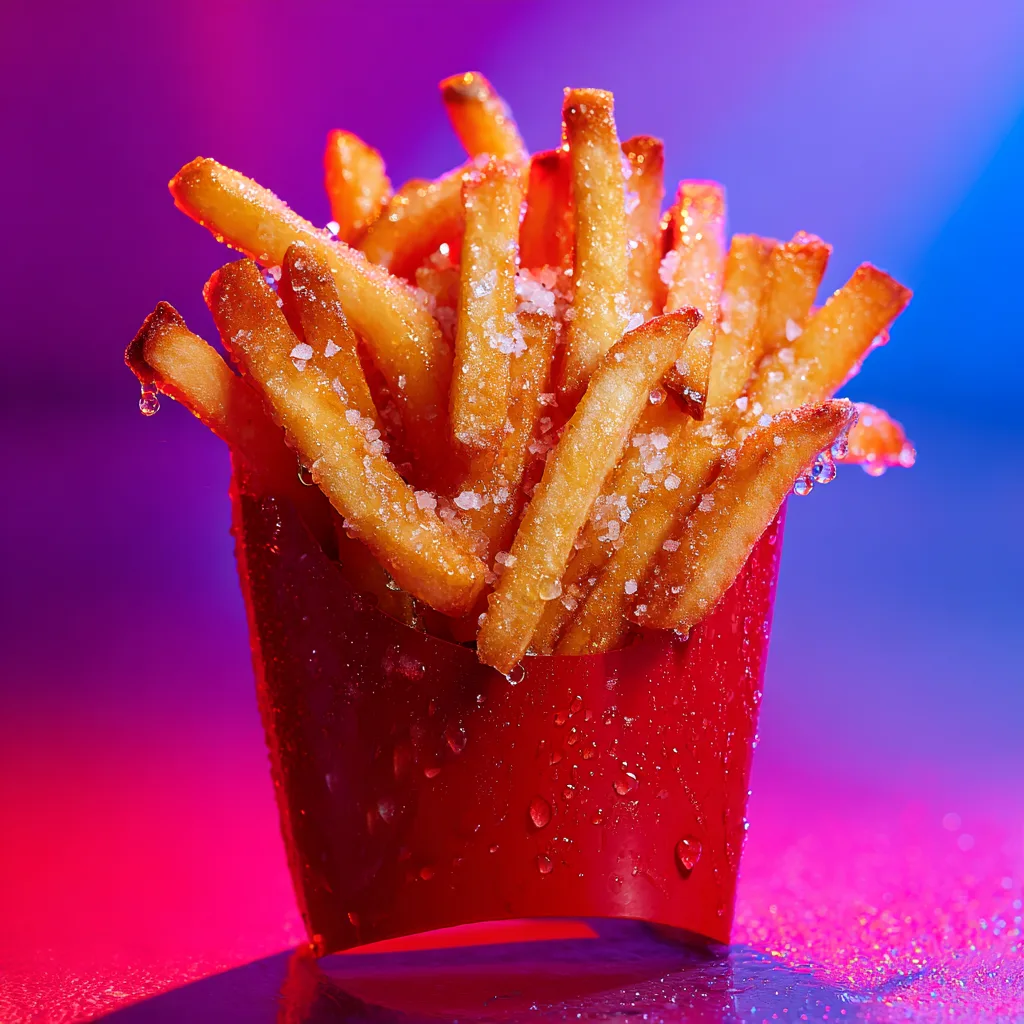
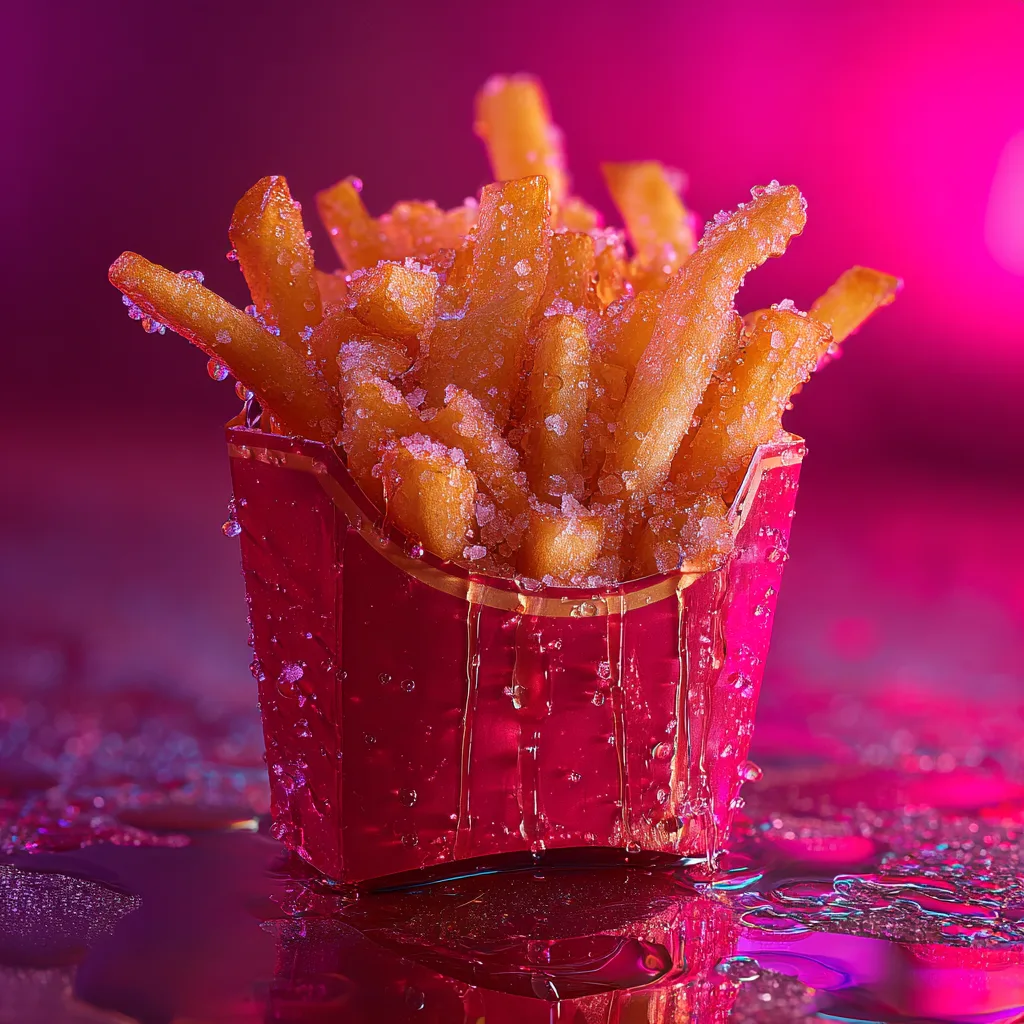
The Neon Party Fry (As Pictured): If you are hosting a vibrant, neon-themed party or simply want to create a visually stunning social media moment, you can play with presentation. Serve your perfectly golden fries upright in classic red cardboard cartons. Dim the overhead lights and use pink, purple, and blue LED lights or glow sticks around the serving area. The shiny, glistening oil on the fries will catch the colored light, making them look almost magical, glowing, and exceptionally drool-worthy.
The Ultimate Dipping Sauces
A great fry demands a great dip. While standard ketchup is a classic, creating your own dipping sauces takes the experience to an entirely new level.
Classic Fry Sauce: A beloved staple in many regions, this is incredibly simple to whip up. Mix equal parts high-quality mayonnaise and ketchup. Add a dash of Worcestershire sauce, a pinch of garlic powder, and perhaps a splash of pickle juice for a bright, tangy finish.
Spicy Sriracha Mayo: For those who love a kick, blend mayonnaise with your preferred amount of Sriracha sauce, a squeeze of fresh lime juice, and a tiny pinch of salt. The creamy fat of the mayo perfectly balances the fiery heat of the chili sauce.
Garlic Aioli: A rich, pungent, and deeply satisfying dip. While traditional aioli is an emulsion of just garlic and olive oil, a quick cheat is to take good mayonnaise and mix in finely grated fresh garlic, a squeeze of lemon juice, salt, and black pepper. Let it sit in the fridge for 30 minutes before serving to allow the flavors to meld.
Conclusion
Mastering the art of the homemade french fry is a rite of passage for any serious home cook. It requires a bit of patience, respect for hot oil, and adherence to the crucial scientific steps of soaking and double-frying. But the reward—a towering pile of glistening, golden, shatteringly crisp potatoes that are fluffy on the inside and seasoned to absolute perfection—is worth every single minute of effort. Once you experience the unparalleled joy of a fry straight from the hot oil, tailored with your own custom seasonings and dips, you will find it incredibly difficult to ever settle for mediocre, fast-food drive-thru fries again. So, grab some Russets, heat up that oil, and prepare to amaze yourself and your guests with the ultimate homemade crispy french fries.
Ultimate Crispy Homemade French Fries
Ingredients
Equipment
Method
- Cut potatoes into 1/4-inch to 3/8-inch thick batons.
- Soak cut potatoes in a large bowl of cold water for at least 30 minutes to remove excess starch.
- Drain the potatoes and dry them completely using clean kitchen towels or paper towels. This step is crucial.
- Heat the oil in a heavy-bottomed pot to 325°F (163°C). Fry the potatoes in batches for 5-6 minutes until cooked through but not browned. Remove and let cool on a wire rack.
- Increase oil temperature to 375°F (190°C). Fry the potatoes a second time in batches for 2-4 minutes until golden brown and crispy.
- Remove from oil, transfer to a bowl, and immediately toss generously with fine sea salt. Serve hot.