Cheesecake French Toast
Cheesecake Stuffed French Toast: The Ultimate Decadent Breakfast Guide
There are ordinary breakfasts, and then there are breakfasts that feel like a spectacular event. If you are looking to elevate your weekend brunch game, celebrate a special occasion, or simply treat yourself to the most indulgent morning meal imaginable, you have found the holy grail of breakfast recipes. Welcome to the world of Cheesecake Stuffed French Toast. This magnificent dish takes everything you love about a classic, comforting plate of French toast and elevates it to a restaurant-quality dessert-for-breakfast experience. Imagine thick, golden-brown slices of buttery bread, perfectly crisped on the outside, giving way to a rich, warm, sweet, and tangy cream cheese filling that perfectly mimics the flavor of a New York-style cheesecake.
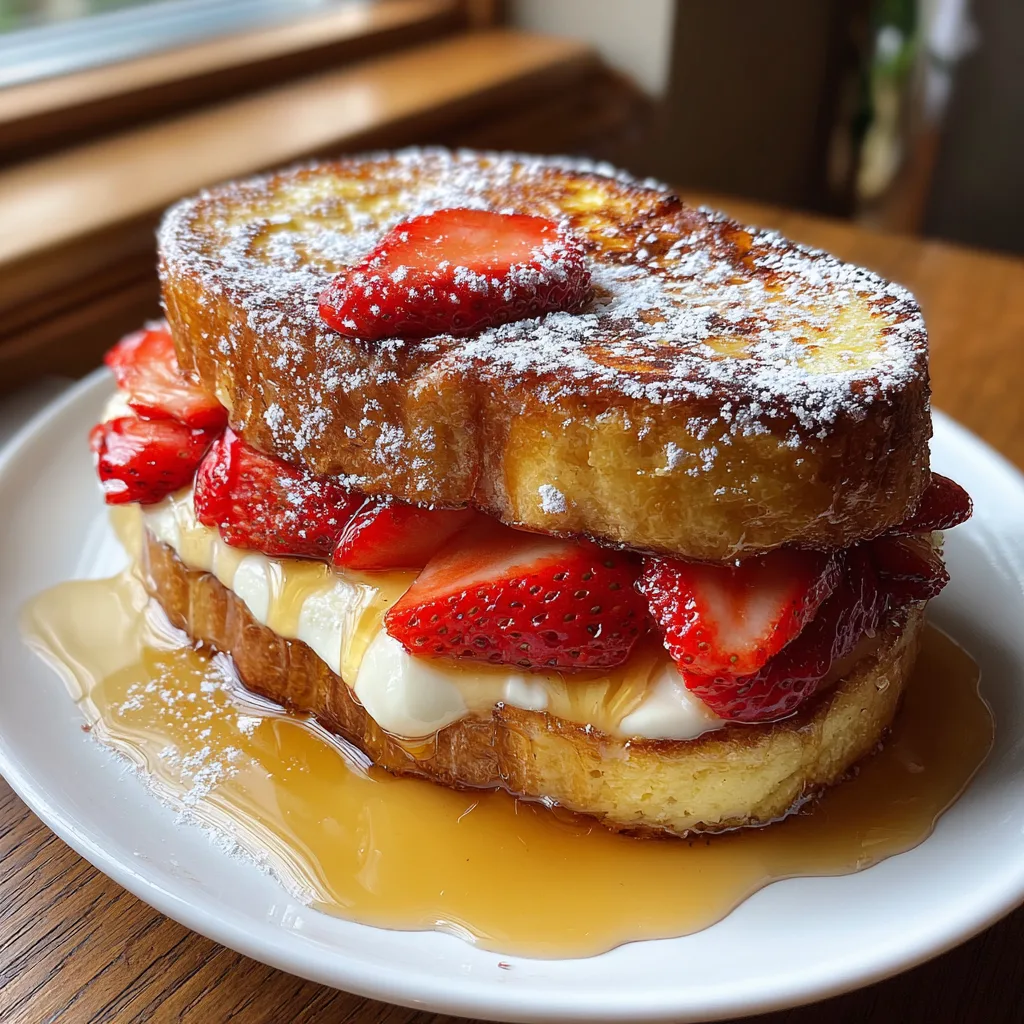
Topped with fresh, vibrant strawberries, a dusting of powdered sugar, and drenched in pure maple syrup, this Cheesecake Stuffed French Toast is guaranteed to leave your family and guests absolutely speechless. In this comprehensive, step-by-step guide, we will explore the science of the perfect stuffed French toast, from selecting the ideal loaf of bread to mastering the perfect custard ratio, and achieving that flawless golden crust without burning the outside or leaving the inside soggy. Prepare to become the ultimate brunch master in your own kitchen.
The Evolution of French Toast
To truly appreciate the majesty of Cheesecake Stuffed French Toast, it helps to understand the humble origins of the dish itself. French toast, known in France as “pain perdu” (which translates to “lost bread”), was originally born out of necessity rather than indulgence. In centuries past, throwing away food was unthinkable. When bread went stale and became too hard to eat on its own, resourceful cooks discovered that soaking it in a mixture of eggs and milk would revive the bread, while frying it in fat would create a delicious, hearty meal.
Over the years, this frugal peasant dish has evolved into a canvas for culinary creativity. We began adding sugar, cinnamon, and vanilla to the egg custard. We swapped out basic sandwich bread for rich, buttery loaves like brioche and challah. And eventually, someone had the brilliant idea to cut a pocket into that thick slice of bread and stuff it with something sweet. Stuffed French toast was born, and it did not take long for the beloved flavor profile of cheesecake to make its way inside the bread, creating the ultimate fusion of breakfast and dessert.
Why Stuff French Toast with Cheesecake?
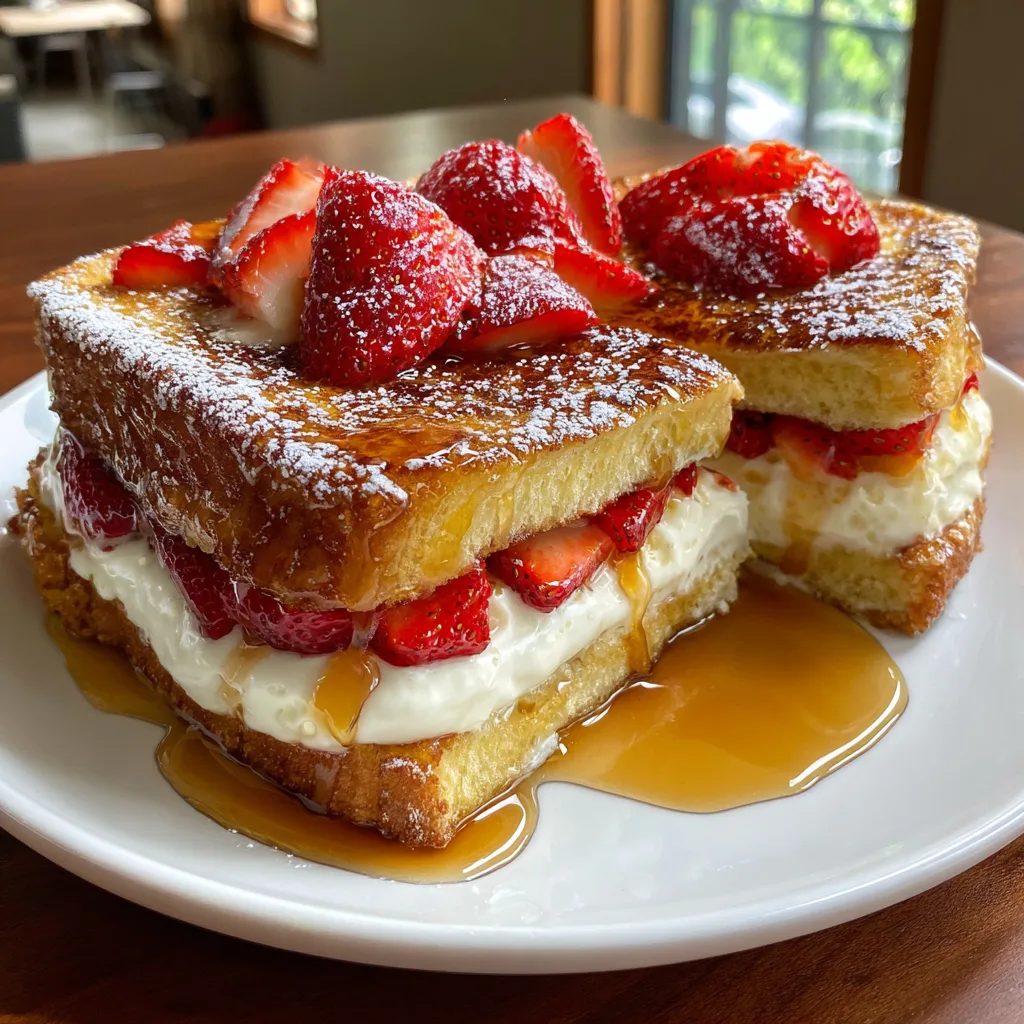
You might be wondering, why go through the effort of stuffing the French toast when you could just spread cream cheese on top? The magic lies in the cooking process. When you encapsulate a sweetened cream cheese mixture inside the bread and cook it on a griddle, a beautiful transformation occurs. The heat from the pan warms the filling, causing it to soften and become incredibly gooey and luscious.
Furthermore, the tangy profile of the cream cheese filling provides a much-needed contrast to the inherent sweetness of the maple syrup and the rich, eggy custard. A standard plate of French toast can sometimes become overwhelmingly sweet after a few bites. The slight tartness of the cheesecake filling acts as a palate cleanser, cutting through the heavy syrup and making every single bite perfectly balanced and incredibly addictive. It is a symphony of textures and flavors: crispy crust, soft bread, warm molten cream cheese, fresh fruit, and sticky syrup.
Choosing the Perfect Bread for Stuffing
The foundation of any great French toast is the bread, but when you are making stuffed French toast, your bread choice is absolutely critical. You cannot use thin, flimsy sandwich bread; it will completely disintegrate in the egg wash or tear when you try to stuff it. You need a bread that is sturdy, thick, and capable of holding a heavy filling without falling apart.
Brioche: This is arguably the king of French toast breads. Brioche is a French pastry bread made with a high content of eggs and butter. It has a tight, soft crumb that acts like a sponge for the custard, yet it holds its structural integrity beautifully. It fries up with a deeply golden, slightly crispy crust that is to die for.
Challah: Similar to brioche, challah is an egg bread, but it is typically dairy-free (made with oil instead of butter). It has a wonderful, slightly chewy texture and a beautiful yellow color. It makes an incredibly structurally sound stuffed French toast.
Texas Toast: If you cannot find brioche or challah, Texas toast is your next best option. It is simply white bread sliced twice as thick as normal. While it lacks the rich buttery flavor of brioche, its thickness makes it ideal for cutting a pocket and holding the cheesecake filling.
The Stale Factor: Regardless of which bread you choose, it must be slightly stale. Fresh, incredibly soft bread will turn to mush when soaked in the egg custard. If you buy fresh bread, slice it the night before and leave it out on the counter to dry out slightly. This allows the bread to soak up the custard without losing its shape.
The Secret to the Best Cheesecake Filling
The filling for this recipe is remarkably simple, but using the right ingredients and technique makes a world of difference. You want a filling that mimics the taste of a baked cheesecake—sweet, tangy, and rich.
You must start with full-fat block cream cheese. Do not use the whipped cream cheese that comes in a tub, as it has too much air whipped into it and will melt and disappear into the bread when heated. The cream cheese must be softened to room temperature before you mix it; otherwise, your filling will be lumpy and uneven.
To sweeten the filling, use powdered sugar (confectioners’ sugar) instead of granulated sugar. Powdered sugar dissolves instantly into the cream cheese, ensuring a perfectly smooth, silky texture. A splash of pure vanilla extract adds that classic bakery flavor. For an extra authentic cheesecake vibe, a tiny squeeze of fresh lemon juice can elevate the tanginess of the cream cheese, though this is entirely optional.
Mastering the Custard Dip
The egg wash, or custard, is what transforms the dry bread into a rich, decadent delight. The ratio of dairy to eggs is crucial. If you use too many eggs, your French toast will taste like a scrambled egg sandwich. If you use too much milk, the bread will become soggy and won’t brown properly.
A good rule of thumb is 1/4 cup of dairy for every large egg. For the dairy, whole milk or half-and-half yields the best, creamiest results. To flavor the custard, a generous dash of ground cinnamon and a splash of vanilla extract are essential. Whisk the mixture thoroughly until the egg yolks and whites are completely homogenous. You don’t want stray pieces of cooked egg white clinging to the outside of your beautiful French toast.
Ingredients You Will Need
Gather these ingredients to start your journey toward the ultimate breakfast masterpiece. Make sure your cream cheese is softened and your bread is thick and ready to go.
- – 8 thick slices of Brioche, Challah, or Texas Toast (about 1 to 1.5 inches thick)
- – 8 ounces full-fat Cream Cheese (1 block), softened to room temperature
- – 1/4 cup Powdered Sugar (Confectioners’ sugar)
- – 1 teaspoon Pure Vanilla Extract (for the filling)
- – 4 large Eggs
- – 1 cup Whole Milk or Half-and-Half
- – 1 teaspoon Ground Cinnamon
- – 1 teaspoon Pure Vanilla Extract (for the custard)
- – 2 tablespoons Unsalted Butter (for frying)
- – Fresh Strawberries, hulled and sliced
- – Pure Maple Syrup, for serving
- – Extra Powdered Sugar, for dusting
Step-by-Step Instructions
- Prepare the Cheesecake Filling: In a medium mixing bowl, combine the softened cream cheese, 1/4 cup of powdered sugar, and 1 teaspoon of vanilla extract. Use an electric hand mixer or a sturdy whisk to beat the mixture until it is completely smooth, fluffy, and free of any lumps. Set this aside.
- Prepare the Bread (The Pocket Method): Take a thick slice of bread. Using a small, sharp paring knife, carefully cut a slit into the bottom edge of the bread crust, creating a deep pocket inside the slice. Be very careful not to cut all the way through to the other sides. Repeat this for all the slices. (Alternatively, if your bread isn’t thick enough, you can make “sandwiches” by spreading the filling between two thinner slices, pressing the edges firmly together).
- Stuff the French Toast: Transfer the cream cheese filling into a piping bag or a large zip-top plastic bag with one corner snipped off. Carefully insert the tip of the bag into the pocket of each slice of bread and squeeze a generous amount of filling inside (about 2-3 tablespoons per slice). Gently press the outside of the bread to distribute the filling evenly.
- Whisk the Custard: In a wide, shallow dish (like a pie plate or a 9×13 baking dish), whisk together the eggs, whole milk, cinnamon, and the remaining 1 teaspoon of vanilla extract until the mixture is completely combined and frothy.
- Heat the Pan: Place a large skillet or a flat griddle over medium-low heat. Add a tablespoon of butter and let it melt until it just begins to foam. Do not let the heat get too high, or the butter will burn before the inside of the toast is warm.
- Dip the Bread: Working with one or two stuffed slices at a time, gently place the bread into the custard mixture. Let it soak for about 10 to 15 seconds on one side, then carefully flip it and let it soak for another 10 seconds on the other side. Do not over-soak, or the heavy bread will tear.
- Cook to Perfection: Transfer the soaked, stuffed bread immediately to the hot skillet. Cook slowly for about 3 to 4 minutes on the first side, until it develops a deep, golden-brown crust. Carefully flip the toast with a wide spatula and cook for another 3 to 4 minutes on the other side. The slow cooking ensures the bread cooks through and the cheesecake filling inside gets delightfully warm and gooey.
- Serve and Garnish: Remove the cooked French toast from the skillet and place it on a serving plate. Top generously with sliced fresh strawberries. Use a fine-mesh sieve to dust the top with powdered sugar, and pour warm, glossy maple syrup over the entire stack just before serving.
Expert Tips for Stuffed French Toast Success
Heat Management is Key: The biggest mistake people make when cooking French toast is having the heat too high. If the pan is too hot, the outside of the bread will burn quickly while the inside remains raw and soggy, and the cream cheese center will stay cold. Medium-low heat is your best friend. It requires a little patience, but the slow, even browning is what yields a perfectly cooked slice.
The Sandwich Hack: If cutting a pocket into the bread feels too intimidating or if your bread slices simply aren’t thick enough, don’t panic. You can easily adapt this recipe. Simply take two regular slices of bread, spread a thick layer of the cheesecake filling onto one slice (leaving a small border around the edges), and top with the second slice. Press the edges together firmly to seal the “sandwich” before dipping it into the egg custard. It works beautifully and tastes exactly the same.
Keep them Warm: If you are cooking for a crowd, you will likely need to cook in batches. To keep the finished French toast warm and crispy while you cook the rest, place a wire cooling rack inside a baking sheet. Set your oven to 200°F (90°C). As you finish each piece of French toast, transfer it to the wire rack in the oven. The wire rack prevents the bottom from getting soggy, and the low heat keeps the cheesecake center perfectly molten.
Creative Flavor Variations
Once you master the basic Cheesecake Stuffed French Toast, the culinary possibilities are truly endless. You can easily customize the filling and toppings to suit different seasons and cravings.
Chocolate Strawberry Stuffed French Toast: Fold two tablespoons of high-quality cocoa powder into the cream cheese filling. Stuff the bread, cook as directed, and serve with fresh strawberries and a heavy drizzle of rich chocolate syrup along with the maple syrup.
Blueberry Lemon Cheesecake: Add a tablespoon of fresh lemon zest and a squeeze of lemon juice to the cream cheese filling. Gently fold in a handful of fresh, small blueberries right into the cream cheese mixture before stuffing the bread. Top with a warm blueberry compote.
Autumn Pumpkin Spice: In the fall, transform this dish by adding a couple of tablespoons of pure pumpkin puree and a teaspoon of pumpkin pie spice to the cream cheese filling. Top the finished dish with toasted pecans and a drizzle of caramel sauce.
Make-Ahead and Freezing Instructions
Believe it or not, stuffed French toast is incredibly freezer-friendly, making it a fantastic option for meal prepping decadent breakfasts for busy weekday mornings.
To freeze, simply cook the stuffed French toast completely according to the instructions. Allow the slices to cool entirely to room temperature on a wire rack. Once cool, place the baking sheet with the slices into the freezer for about an hour until they are frozen solid (this is called flash-freezing and prevents them from sticking together). Transfer the frozen slices to a heavy-duty zip-top freezer bag or an airtight container. They will keep well for up to 2 months.
When you are ready to eat, there is no need to thaw them. Simply pop the frozen stuffed French toast into a toaster oven, an air fryer, or a conventional oven set to 350°F (175°C) until heated through and crispy on the outside again (about 10-15 minutes). Avoid microwaving, as it will make the bread incredibly soggy.
Frequently Asked Questions (FAQs)
Can I use light cream cheese to make it healthier?
You can use reduced-fat cream cheese (Neufchâtel cheese), but it is not recommended to use fat-free cream cheese. Fat-free cream cheese contains stabilizers and higher water content that can become grainy or completely liquefy when heated inside the French toast. For the best, richest texture, stick to full-fat block cream cheese.
My French toast is sticking to the pan. What am I doing wrong?
This usually happens for two reasons: your pan isn’t hot enough when you add the bread, or you don’t have enough fat in the pan. Make sure the butter is fully melted and slightly bubbling before adding the soaked bread. If the pan is dry, the egg will act like glue. A non-stick skillet or a well-seasoned cast-iron griddle works best.
Why is the inside of my French toast soggy?
Soggy French toast is usually the result of bread that is too fresh and soft, over-soaking the bread in the custard, or cooking at a temperature that is too high, which sears the outside before the inside can cook. Use stale, thick bread, dip quickly, and cook slowly over medium-low heat.
Conclusion
Cheesecake Stuffed French Toast is more than just a recipe; it is an experience that brings the joy of a weekend bakery visit right into your own dining room. The incredible contrast between the crispy, buttery, cinnamon-laced exterior and the warm, creamy, tangy cheesecake interior is a flavor profile that everyone will love. By choosing the right bread, mastering the simple filling, and cooking with patience, you can create a breakfast masterpiece that looks stunning and tastes even better. Gather your ingredients, heat up that griddle, and get ready to enjoy the most indulgent, delicious breakfast you have ever made.
Cheesecake Stuffed French Toast
Ingredients
Equipment
Method
- In a bowl, beat the softened cream cheese, powdered sugar, and 1 tsp of vanilla extract until smooth. Transfer to a piping bag.
- Use a paring knife to carefully cut a pocket into the bottom crust of each thick slice of bread, being careful not to cut all the way through.
- Pipe 2-3 tablespoons of the cream cheese filling into the pocket of each slice of bread, pressing gently to distribute.
- In a shallow dish, whisk together the eggs, milk, cinnamon, and remaining 1 tsp vanilla extract until well combined.
- Melt butter in a large skillet or griddle over medium-low heat.
- Dip each stuffed slice of bread into the egg mixture for about 10-15 seconds per side. Do not over-soak.
- Place the soaked bread into the skillet and cook slowly for 3-4 minutes per side until golden brown and crispy.
- Serve immediately topped with fresh sliced strawberries, a dusting of powdered sugar, and warm maple syrup.