Melt-In-Your-Mouth Brisket
Melt-In-Your-Mouth Slow Cooker Brisket: A Hands-Off Culinary Masterpiece
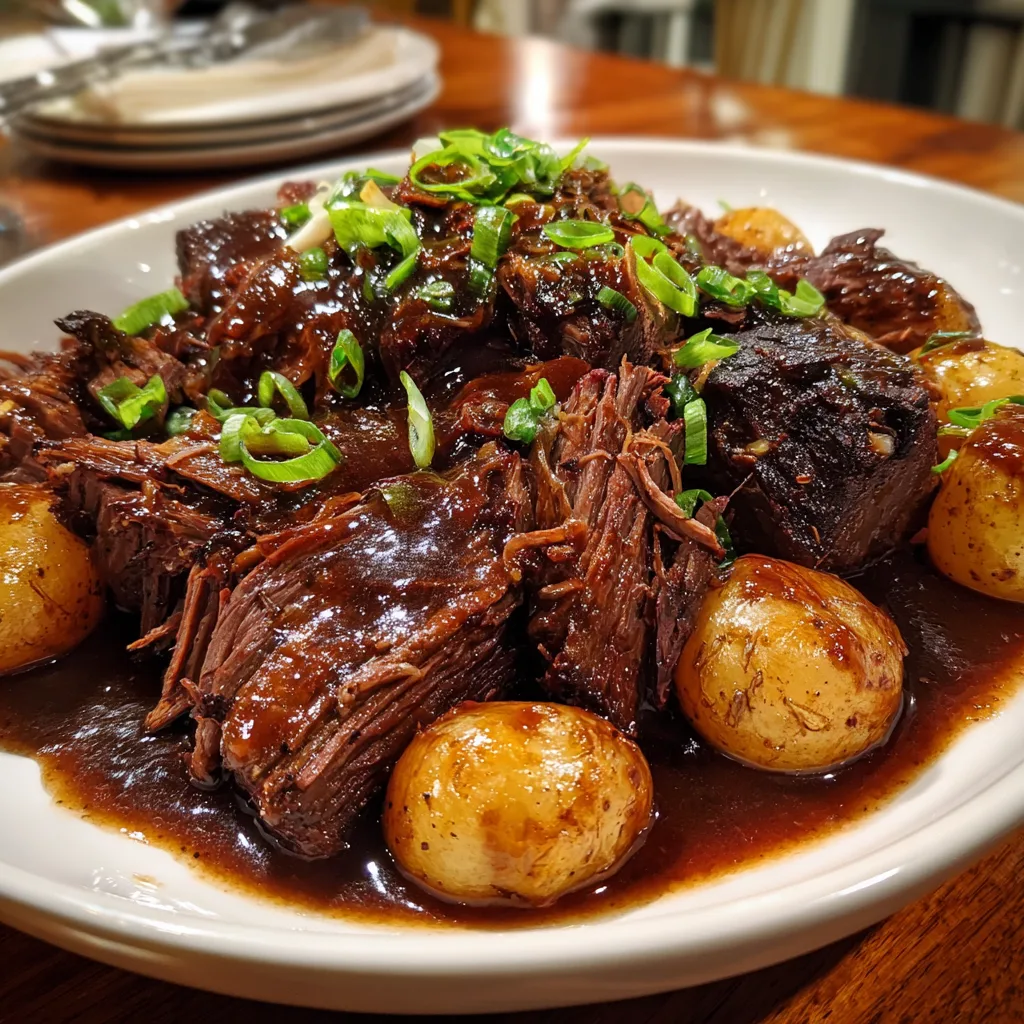
There is an undeniable, almost primal magic that happens when a tough, humble cut of beef is transformed into a buttery, melt-in-your-mouth masterpiece. If you have ever been intimidated by cooking large roasts or standing over a hot grill for twelve hours to achieve barbecue perfection, prepare to have your life changed. This Melt-In-Your-Mouth Slow Cooker Brisket delivers all the intensely savory, deeply complex flavors and fall-apart tender textures of a classic braised brisket, but with a fraction of the hands-on effort.
Imagine coming home after a long, exhausting day to a house filled with the intoxicating, savory aroma of slow-cooked beef, caramelized onions, and rich, dark gravy. The slow cooker does the heavy lifting, gently coaxing the stubborn connective tissues of the brisket into silken gelatin over the course of eight hours. Whether you are hosting a festive holiday gathering, preparing a comforting Sunday supper for your family, or meal-prepping for a busy week ahead, this recipe is a guaranteed crowd-pleaser that requires minimal active cooking time but yields maximum flavor.
Why This Slow Cooker Brisket is Pure Magic
Brisket is a notoriously finicky cut of meat. Cook it too fast, and it becomes as tough as shoe leather. Cook it without enough moisture, and it dries out into a stringy mess. However, when you introduce it to the gentle, consistent, and moist heat of a slow cooker, magic truly happens. The slow cooker acts as the perfect braising environment, trapping steam and allowing the meat to baste in its own juices and the deeply flavorful braising liquid.
What sets this specific recipe apart is the carefully crafted flavor profile of the braising liquid. We do not just rely on water or basic beef broth. Instead, we build a complex foundation using aromatic onions and garlic, the umami-rich depth of soy sauce and Worcestershire sauce, a hint of tomato paste for acidity, and a touch of brown sugar to aid in caramelization and balance the savory notes. As the brisket cooks, this liquid reduces and mingles with the rendered beef fat, eventually transforming into a glossy, rich gravy that you will want to pour over absolutely everything.
Understanding the Brisket Cut: Flat vs. Point
To master brisket, you must first understand the anatomy of the cut. The brisket comes from the lower chest or breast of the cow. Because cows do not have collarbones, these muscles support a massive amount of the animal’s body weight. Consequently, the brisket is packed with tough connective tissue and thick muscle fibers. It is generally divided into two distinct parts: the “flat” and the “point.”
The Flat Cut: This is the leaner, more uniform half of the brisket. It looks like a long, rectangular piece of meat. It slices beautifully and offers a very beefy flavor. However, because it is so lean, it is more prone to drying out if not cooked with care and sufficient moisture.
The Point Cut: This section is thicker, more uneven, and heavily marbled with fat. It is the cut preferred by barbecue pitmasters for making burnt ends because the high fat content keeps the meat incredibly moist and succulent during long cooking times.
For this slow cooker recipe, you can successfully use either cut, or a whole “packer” brisket if your slow cooker is large enough to accommodate it. If you choose the flat cut (which is most common in standard grocery stores), the moist environment of the slow cooker will ensure it stays juicy. If you use the point cut, your resulting gravy will be richer and fattier, which many people prefer.
The Science of Slow Cooking: Collagen to Gelatin
The secret to “melt-in-your-mouth” texture lies in a fascinating culinary science. Tough cuts like brisket are loaded with a connective tissue protein called collagen. At high, rapid temperatures, collagen tightens up, squeezing moisture out of the meat and making it incredibly tough. However, when exposed to low, slow heat (between 160°F and 205°F) over a prolonged period, something beautiful happens.
The tightly wound collagen fibers begin to unwind and melt, transforming into rich, silky gelatin. This gelatin coats the muscle fibers of the beef, providing a luxurious mouthfeel and the perception of extreme juiciness, even if the meat itself has lost some of its internal water content. This transformation takes time—usually 8 to 10 hours on the low setting of a slow cooker. Rushing this process by using the high setting will often result in meat that is cooked through, but still chewy.
The Crucial Step: The Maillard Reaction
While the slow cooker does most of the work, there is one active step you absolutely must not skip: searing the meat before it goes into the pot. Searing the brisket in a hot skillet before slow cooking triggers the Maillard reaction. This is a complex chemical reaction between amino acids and reducing sugars that gives browned food its distinctive, savory flavor.
By searing the brisket, you are creating a deep, dark, caramelized crust that will infuse the entire dish with complex, roasted notes. If you were to simply drop a raw brisket into the slow cooker, it would essentially boil in the broth, resulting in a dull, flat flavor profile. Take the extra ten minutes to sear the beef until a dark crust forms on all sides. It is the difference between a good brisket and a spectacular one.
Ingredients List
Gather the following ingredients to begin your slow cooker magic:
- – 1 beef brisket (3 to 4 pounds), fat cap trimmed to 1/4 inch
- – 2 tablespoons olive oil
- – 1 tablespoon kosher salt
- – 1 tablespoon freshly ground black pepper
- – 1 teaspoon smoked paprika
- – 1 teaspoon garlic powder
- – 1 teaspoon onion powder
- – 2 large yellow onions, thickly sliced
- – 4 cloves garlic, smashed and peeled
- – 1.5 cups low-sodium beef broth
- – 1/4 cup soy sauce (or tamari for gluten-free)
- – 2 tablespoons Worcestershire sauce
- – 2 tablespoons tomato paste
- – 2 tablespoons brown sugar, packed
- – 1 tablespoon apple cider vinegar
- – 2 tablespoons cornstarch (for thickening the gravy later)
- – 2 tablespoons cold water (for the cornstarch slurry)
- – Fresh parsley or green onions, chopped for garnish
Step-by-Step Instructions
Follow these steps to achieve ultimate brisket perfection:
- Prepare the Spice Rub: In a small bowl, combine the kosher salt, black pepper, smoked paprika, garlic powder, and onion powder. Pat the brisket completely dry with paper towels. This is crucial for a good sear. Rub the spice mixture generously all over the brisket, pressing it into the meat.
- Sear the Brisket: Heat the olive oil in a large, heavy-bottomed skillet or Dutch oven over medium-high heat until it is shimmering. Carefully place the brisket into the hot pan (you may need to cut it in half to fit). Sear the meat for 4 to 5 minutes on each side, until a deep, dark brown crust has formed. Remove the brisket and set it aside.
- Prepare the Slow Cooker: Place the thickly sliced yellow onions and the smashed garlic cloves into the bottom of your slow cooker insert. This creates a bed for the brisket to rest on, preventing the bottom from overcooking and infusing the onions with incredible flavor. Place the seared brisket on top of the onions, fat side up.
- Mix the Braising Liquid: In a medium bowl, whisk together the beef broth, soy sauce, Worcestershire sauce, tomato paste, brown sugar, and apple cider vinegar until smooth. Pour this mixture carefully over and around the brisket in the slow cooker.
- Cook Low and Slow: Place the lid securely on the slow cooker. Set it to the LOW setting and cook for 8 to 9 hours. You will know it is done when the meat is extremely tender and pulls apart easily with a fork. Do not rush the process by cooking on high; low and slow is the key to melting the collagen.
- Rest the Meat: Once cooked, carefully remove the tender brisket from the slow cooker and transfer it to a large cutting board or platter. Tent it loosely with aluminum foil and let it rest for at least 15 to 20 minutes. Resting allows the muscle fibers to relax and reabsorb the juices. If you slice it immediately, all the moisture will run out onto the board.
- Make the Gravy: While the meat is resting, skim any excess fat off the top of the liquid remaining in the slow cooker. Transfer the liquid and the cooked onions to a medium saucepan and bring it to a simmer over medium heat on the stove. In a small bowl, whisk the cornstarch and cold water together to create a slurry. Slowly pour the slurry into the simmering liquid, whisking constantly. Let it boil for 2-3 minutes until the gravy becomes thick and glossy.
- Slice and Serve: Identify the “grain” of the brisket (the direction the muscle fibers are running). Use a sharp knife to slice the brisket thinly across the grain. This shortens the muscle fibers, making the meat incredibly tender to chew. Alternatively, you can use two forks to shred the beef. Transfer the sliced or shredded beef to a serving platter, pour the hot, rich gravy generously over the top, and garnish with fresh green onions or parsley.
Expert Tips for Absolute Perfection
To ensure your brisket is consistently a triumph, keep these professional tips in mind:
- Trim the Fat (But Not All of It): Brisket usually comes with a thick layer of hard fat called the “fat cap.” You want to trim this down so there is only about a 1/4-inch layer remaining. Leaving a little fat is essential, as it will slowly render down during the cooking process, basting the meat and keeping it moist.
- Slice Against the Grain: This is arguably the most important rule of serving brisket. The grain refers to the visible lines of muscle fiber running through the meat. If you slice parallel to these lines, your meat will be stringy and tough to chew, regardless of how long you cooked it. Slicing perpendicularly across the grain cuts those fibers into short, manageable pieces that melt in your mouth.
- The Fork Test: The cooking times provided are a guideline. The true test of doneness is the fork test. Insert a fork into the thickest part of the meat and twist gently. If it yields with absolutely no resistance, it is ready. If it feels tight or bouncy, it needs another hour or two.
Variations and Customizations
This recipe provides a fantastic, savory, all-purpose flavor profile. However, brisket is incredibly versatile and takes well to many different flavor variations:
BBQ Style: If you are craving a barbecue flavor without the smoker, substitute the beef broth, soy sauce, and Worcestershire with 2 cups of your favorite high-quality barbecue sauce, thinned out with 1/2 cup of apple cider or beer. Add a teaspoon of liquid smoke to the mixture for an authentic, smoky aroma.
Red Wine Braised: For a more elegant, French-inspired flavor profile reminiscent of beef bourguignon, replace 1 cup of the beef broth with a dry, full-bodied red wine like Cabernet Sauvignon or Merlot. Add fresh sprigs of rosemary and thyme to the slow cooker along with some chopped carrots.
Spicy Kick: If you love a little heat, add a diced jalapeño (seeds removed for milder heat, seeds kept for fiery heat) to the onion bed, and whisk a tablespoon of adobo sauce from canned chipotle peppers into your braising liquid.
Serving Suggestions and Side Dishes
A rich, hearty dish like this demands spectacular side dishes to complete the meal. Because the brisket and gravy are so savory and intense, you want sides that provide contrast in texture and flavor.
Mashed Potatoes: The ultimate vehicle for that rich, glossy gravy. Creamy garlic mashed potatoes or even a mashed cauliflower alternative will soak up all those glorious juices beautifully.
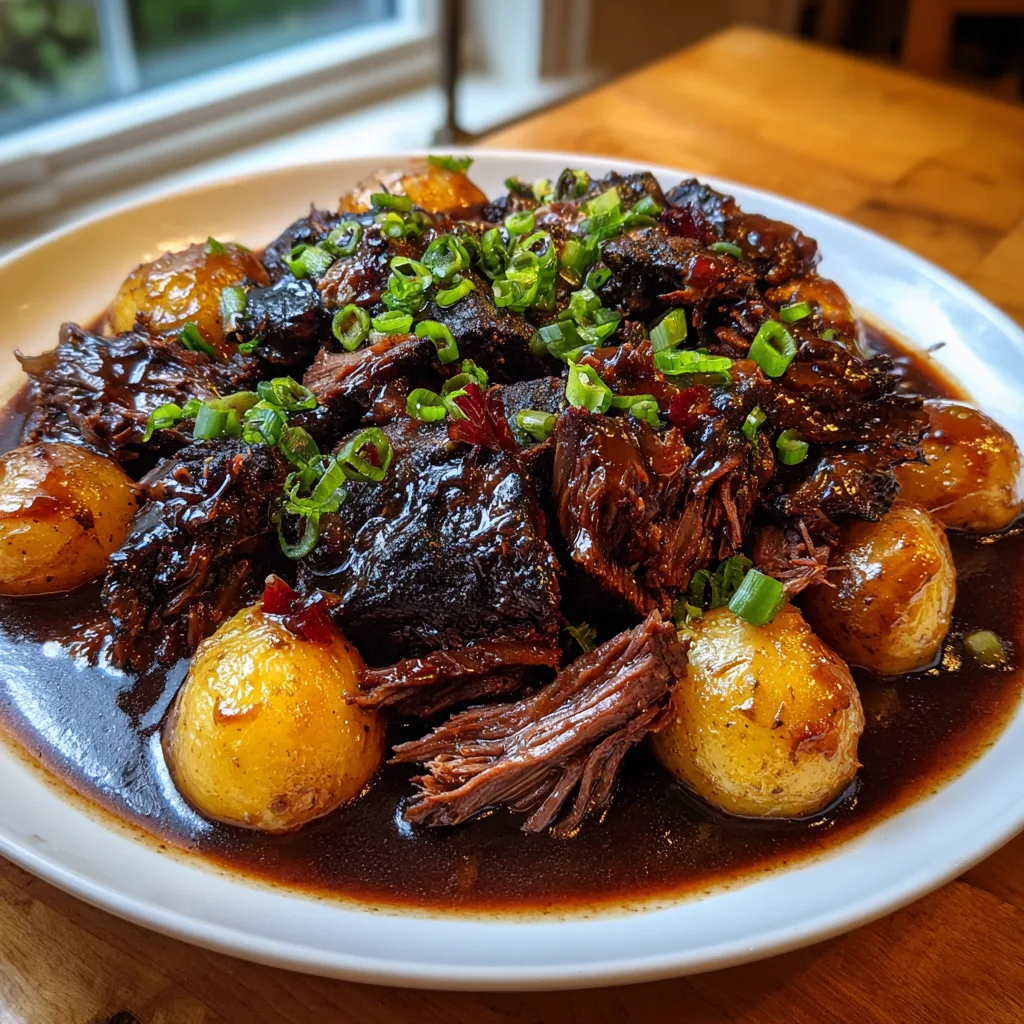
Roasted Root Vegetables: Golden, crispy roasted potatoes (as seen in the inspiration image), honey-glazed carrots, or roasted parsnips offer an earthy sweetness that balances the umami of the beef.
Something Bright and Acidic: To cut through the richness of the meat, serve a bright, tangy side. A crisp apple cider vinegar coleslaw, a sharp green salad with a lemon vinaigrette, or even simple pickled red onions are phenomenal additions to the plate.
Bread: Do not forget the carbohydrates to mop up your plate! Soft dinner rolls, crusty French bread, or buttery cornbread are essential for capturing every last drop of gravy.
Storage, Freezing, and Reheating Instructions
Brisket is one of those rare dishes that often tastes even better the next day, as the flavors have had time to meld and deepen in the refrigerator. Here is how to handle your leftovers:
Storage: Store the leftover brisket and the gravy together in an airtight container in the refrigerator for up to 4 days. Storing the meat submerged in the gravy prevents it from drying out.
Freezing: Brisket freezes beautifully. Place the sliced or shredded meat and the gravy into a heavy-duty freezer bag or airtight container. Squeeze out as much air as possible to prevent freezer burn. It will keep well in the freezer for up to 3 months. Thaw overnight in the refrigerator before reheating.
Reheating: The best way to reheat brisket without drying it out is low and slow. Place the meat and gravy in an oven-safe dish, cover tightly with foil, and warm in a 300°F (150°C) oven until heated through. Alternatively, you can warm it gently in a saucepan on the stovetop over medium-low heat.
Fun Facts About Brisket
Brisket has a rich and diverse culinary history. In Texas, brisket is the undisputed king of barbecue. Traditional Texas BBQ involves smoking a whole packer brisket over oak or hickory wood for up to 18 hours until it develops a thick, black “bark” and a distinct pink smoke ring.
Long before it became a barbecue staple, brisket was a centerpiece of Ashkenazi Jewish cuisine. Because it is found in the front of the cow, it is considered a kosher cut. However, historically, it was a very cheap cut of meat that required long braising to become palatable. Jewish immigrants brought their traditions of slowly braising brisket with onions, carrots, and potatoes to America, and it remains a traditional holiday dish served during Passover and Rosh Hashanah to this day.
In Irish-American culture, brisket is the cut of beef used to make corned beef. The meat is cured in a brine of salt and spices for several days before being boiled, traditionally served with cabbage on St. Patrick’s Day.
Conclusion
Creating a truly magnificent brisket does not require advanced culinary skills, expensive equipment, or standing over a hot stove all day. With a trusty slow cooker, a few simple pantry staples, and the patience to let time do the heavy lifting, you can produce a show-stopping meal that will have your family and friends begging for the recipe. This Melt-In-Your-Mouth Slow Cooker Brisket is a testament to the power of slow cooking—transforming the tough into the tender, and the ordinary into the extraordinary. So set your slow cooker, go about your day, and prepare to come home to a meal that tastes like pure magic.
Melt-In-Your-Mouth Slow Cooker Brisket
Ingredients
Equipment
Method
- Combine salt, pepper, paprika, garlic powder, and onion powder. Pat brisket dry and rub the spice mixture all over the meat.
- Heat olive oil in a large skillet over medium-high heat. Sear the brisket for 4-5 minutes per side until a dark crust forms.
- Place sliced onions and smashed garlic in the bottom of the slow cooker. Place the seared brisket on top, fat side up.
- Whisk together beef broth, soy sauce, Worcestershire, tomato paste, brown sugar, and vinegar. Pour over the brisket.
- Cover and cook on LOW for 8-9 hours, until the meat is incredibly tender and easily pulls apart.
- Remove brisket to a cutting board, tent with foil, and let it rest for 15-20 minutes.
- Skim fat from the slow cooker liquid. Pour liquid into a saucepan and bring to a simmer. Whisk cornstarch and cold water together, then whisk into the simmering liquid. Cook for 2-3 minutes until thickened.
- Slice the rested brisket thinly against the grain (or shred it). Serve with the hot gravy poured over top.