
Irish Seafood Chowder
Traditional Irish Seafood Chowder: A Creamy, Comforting, and Authentic Recipe
When the air turns crisp and the wind begins to howl, there is absolutely nothing more universally comforting than a steaming, fragrant bowl of rich soup. Among the pantheon of great global soups and stews, traditional Irish Seafood Chowder stands entirely in a league of its own. This is not just a meal; it is a warm, enveloping embrace in a bowl. Originating from the rugged, windswept coastlines of Ireland, this spectacular dish takes the freshest bounties of the cold Atlantic Ocean and marries them with the humble, earthy staples of the Irish agricultural landscape: root vegetables, tender potatoes, and incredibly rich, high-quality dairy.
If you have ever had the profound pleasure of traveling through Ireland, you have likely stopped at a cozy, fire-lit pub along the Wild Atlantic Way and been served a bowl of their house chowder alongside a thick slice of brown soda bread slathered in butter. It is an unforgettable culinary experience. The good news is that you do not need to book a flight to Dublin or Galway to experience this magic. In this comprehensive, step-by-step guide, we are going to teach you exactly how to recreate this masterpiece in your very own kitchen. From selecting the absolute best fish at your local market to achieving the perfect, velvety-smooth broth, we will cover every single detail necessary to make the ultimate Irish Seafood Chowder.
The Rich History and Cultural Significance of Irish Chowder
To truly appreciate this magnificent dish, one must understand its humble, working-class origins. Ireland is an island nation, and for centuries, the sea has been a primary source of sustenance for its people. Coastal fishing villages relied heavily on whatever the day’s catch brought in. At the end of a long, freezing day on the boats, fishermen would bring home the odd pieces of fish that were perhaps too small or unsuitable for the commercial markets.
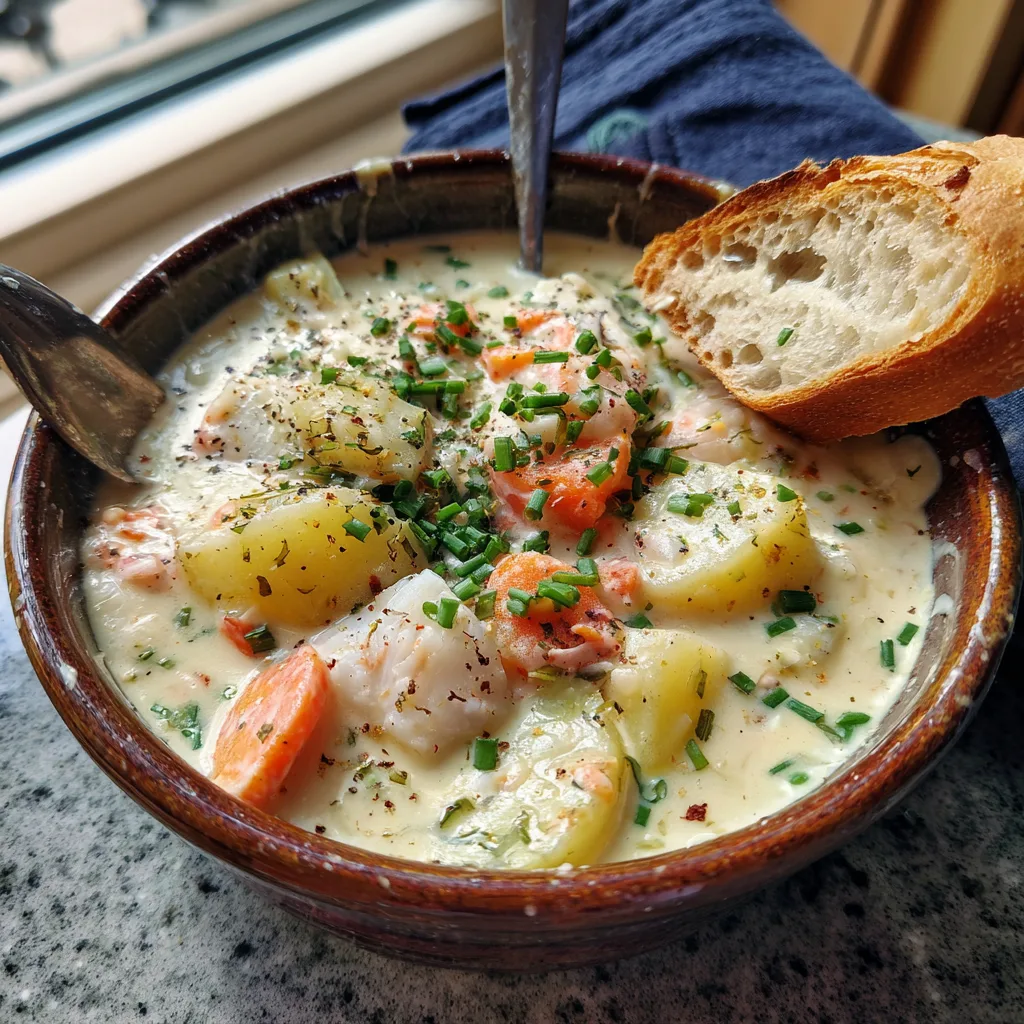
These assorted remnants of white fish, salmon, and occasionally shellfish were tossed into a pot with the staples that every Irish family had on hand: onions, carrots, milk, and, most importantly, the potato. The potato was crucial not just for its caloric value and ability to stretch a meal to feed a large family, but also for its natural starches, which helped to subtly thicken the milky broth as it simmered over an open hearth fire. Over time, as dairy production in Ireland became world-renowned for its exceptional quality and high butterfat content, the chowder evolved from a thin, frugal fisherman’s stew into the rich, luxurious, cream-based delicacy we recognize and adore today.
Why You Will Fall Completely in Love with This Recipe
There are countless chowder recipes available in the world, from the clam-heavy broths of New England to the tomato-based Manhattan stews. However, the Irish variation holds a special charm that makes it incredibly appealing to home cooks and dinner guests alike.
Unparalleled Depth of Flavor: Unlike some chowders that taste overwhelmingly of one specific ingredient (like clams), an Irish chowder is a beautiful symphony of flavors. The subtle sweetness of the salmon, the delicate flakiness of the white fish, and the savory depth of smoked haddock or smoked bacon (a common addition) all balance perfectly against the sweet carrots and aromatic herbs.
Luxurious, Velvety Texture: The hallmark of a great Irish chowder is its broth. It should never be thick and gloopy like wallpaper paste, nor should it be thin and watery. By using a carefully crafted roux (a mixture of butter and flour) combined with fish stock, whole milk, and a generous splash of heavy cream, we achieve a texture that coats the back of a spoon beautifully and feels incredibly luxurious on the palate.
Incredible Versatility: One of the greatest things about this recipe is its adaptability. While we provide a specific list of fish, an authentic Irish chowder is fundamentally a “catch of the day” recipe. You can use whatever fresh, high-quality seafood is available to you, making it an excellent recipe for adapting to local ingredients and seasonal availability.
Selecting the Perfect Seafood for Your Chowder
The success of your chowder rests almost entirely on the quality and variety of the seafood you choose to include. A traditional Irish mix usually features three distinct types of fish to create a complex flavor profile.
1. Firm White Fish: This is the foundational protein of your chowder. You need a fish that will hold its shape when simmered gently in the broth, rather than disintegrating into mush. Cod, haddock, hake, or halibut are all phenomenal choices. They provide a mild, clean flavor and a satisfying, meaty texture.
2. Oily, Flavorful Fish: Salmon is the undisputed king in this category. The inclusion of fresh, skinless salmon fillets adds a gorgeous pop of pink color to the white broth and introduces a rich, buttery flavor that defines the authentic Irish chowder experience. You can use wild-caught or sustainably farmed salmon, depending on your preference.
3. The Smoked Element: This is the secret ingredient that elevates the dish from good to extraordinary. Smoked fish imparts a deep, savory, slightly woody aroma that permeates the entire pot. Smoked haddock or smoked coley are traditional choices. If you cannot find smoked fish at your local fishmonger, you can substitute it by rendering down a few strips of high-quality smoked bacon or pancetta at the very beginning of the recipe to build that necessary smoky flavor base.
Optional Additions: While not strictly necessary, adding a handful of fresh mussels, clams, or plump shrimp in the final few minutes of cooking can turn this everyday comfort food into a show-stopping, elegant dinner party centerpiece.
The Essential Vegetable Base and Broth
Before any fish hits the pot, you must build the flavor foundation. This begins with a classic “mirepoix” or vegetable base consisting of finely diced onions, carrots, and celery. These vegetables should be sweated slowly in high-quality butter until they are soft and translucent, but not browned.
Potatoes are an absolute non-negotiable ingredient. You want a waxy or all-purpose potato, like a Yukon Gold or a standard white potato. Avoid highly starchy potatoes like Russets, as they will break down too quickly and turn your soup grainy. The potatoes should be diced into uniform, bite-sized cubes so they cook evenly.
For the liquid, a combination of good quality fish stock and dairy is essential. If you cannot find fish stock, a mild vegetable broth or even a very light chicken broth can work in a pinch, but fish stock provides the most authentic sea-kissed flavor. Whole milk and heavy cream (double cream) provide the necessary richness.
Ingredients for Traditional Irish Seafood Chowder
Gather the following ingredients to create a large, comforting pot of chowder. Ensure your seafood is as fresh as possible for the best results.
For the Base and Broth:
For the Seafood:
Step-by-Step Instructions
Creating this masterpiece is a lesson in layering flavors and treating delicate ingredients with care. Follow these numbered steps precisely.
- Sauté the Vegetables: Place a large, heavy-bottomed pot or Dutch oven over medium heat. Add the butter and allow it to melt completely. Add the finely diced onion, carrots, and celery. Cook gently for about 8 to 10 minutes, stirring occasionally. You want the vegetables to soften and become translucent without taking on any brown color.
- Create the Roux: Sprinkle the all-purpose flour evenly over the softened vegetables in the pot. Stir constantly with a wooden spoon for exactly 2 minutes. This cooks the raw flour taste out and creates the thickening base for your chowder. The mixture will look thick and slightly pasty.
- Incorporate the Liquids: Very slowly, begin to pour in the fish stock, whisking constantly as you pour to prevent any lumps from forming. Once the stock is fully incorporated and smooth, slowly whisk in the whole milk.
- Simmer the Potatoes: Add the diced potatoes, bay leaf, and thyme to the pot. Season with a generous pinch of salt and a few grinds of black pepper. Bring the mixture to a very gentle simmer (do not let it come to a rolling boil, or the milk may curdle). Reduce the heat to low, cover the pot, and let it cook for about 12 to 15 minutes, or until the potatoes are fork-tender.
- Add the Seafood: Once the potatoes are soft, carefully slide all of your prepared fish chunks (white fish, salmon, and smoked fish) into the gently simmering broth. Stir very gently so you do not break up the fish.
- Poach the Fish: Keep the heat on low and let the chowder simmer gently for 5 to 7 minutes. The fish will cook very quickly in the hot liquid. You will know it is done when the salmon turns an opaque pale pink and the white fish flakes easily.
- Add the Cream and Finish: Remove the pot from the heat. Carefully fish out and discard the bay leaf. Stir in the heavy cream. Taste the broth carefully and adjust the seasoning, adding more salt or black pepper as needed. (Smoked fish can be salty, so always taste before adding extra salt at the end).
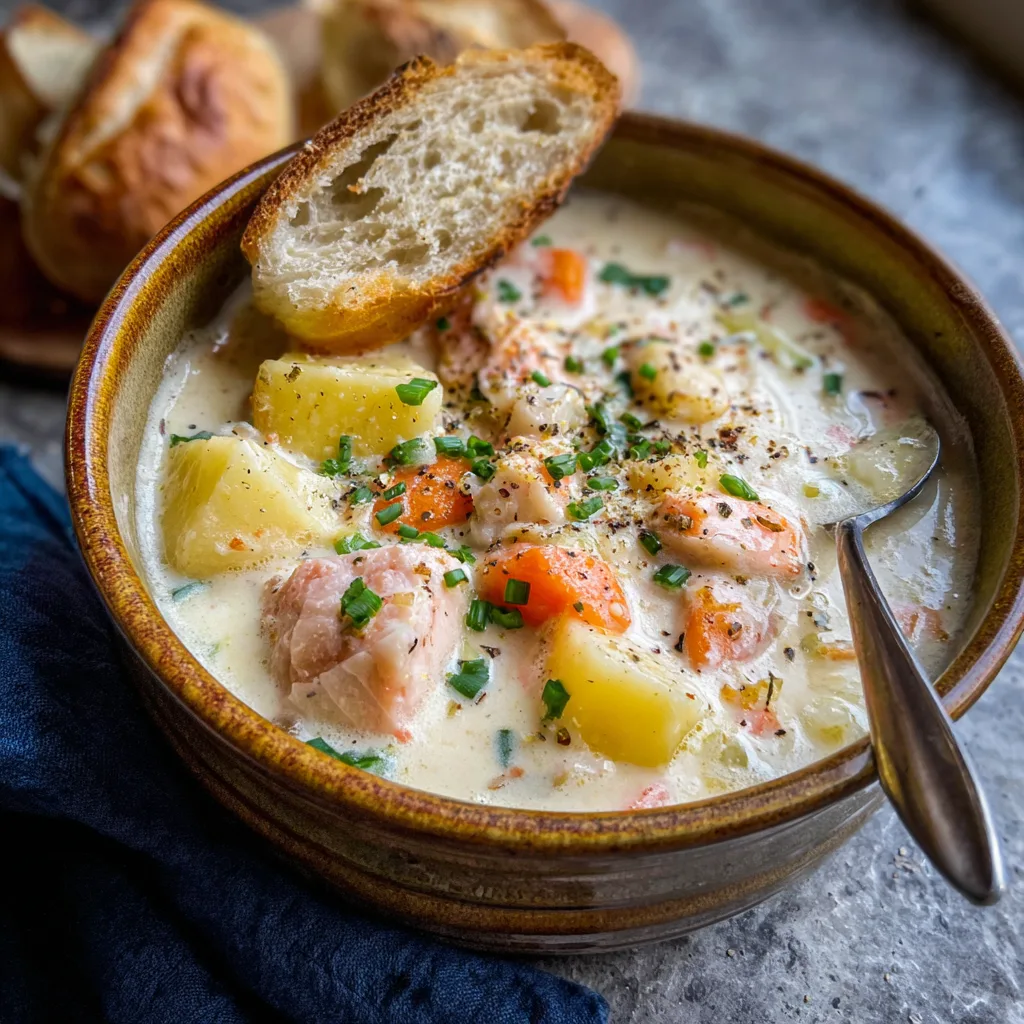
- Garnish and Serve: Ladle the hot chowder into warm, shallow bowls. Garnish generously with freshly chopped chives and an extra crack of black pepper. Serve immediately with thick slices of buttered crusty bread or traditional Irish soda bread for dipping.
Expert Tips for the Ultimate Chowder
To ensure your chowder is of restaurant-quality caliber, keep these professional culinary tips in mind while cooking.
Do Not Boil the Soup: Once you add the milk, and especially after you add the fish, it is absolutely critical that the soup does not come to a rapid, rolling boil. Boiling dairy can cause it to split or curdle, resulting in a grainy texture. Boiling will also overcook the delicate seafood, making it tough and rubbery. A gentle, lazy simmer is all you need.
Cut Ingredients Uniformly: Take your time during the preparation phase to chop your potatoes, carrots, and fish into uniform, even-sized pieces. This not only makes the chowder look beautiful and professional in the bowl, but it ensures that everything cooks at the exact same rate.
Let It Rest: While it is incredibly tempting to dive right in, chowder actually benefits from sitting off the heat for about 10 minutes before serving. This brief resting period allows the flavors to meld together and the starch from the potatoes to thicken the broth just a fraction more, creating the perfect consistency.
What to Serve with Your Chowder
A bowl of this rich stew is incredibly filling and serves as a complete meal on its own. However, the experience is not complete without the proper accompaniments to soak up every last drop of that incredible broth.
Traditional Irish brown soda bread is the most authentic pairing. The dense, slightly sweet, and nutty flavor of the bread provides a brilliant contrast to the creamy, savory soup. If you don’t have soda bread, a high-quality crusty French baguette, sourdough bread, or even savory cheddar biscuits make phenomenal substitutes. A light, crisp green salad with a sharp vinaigrette on the side can also help cut through the richness of the main course.
Storage and Reheating Instructions
Seafood chowder is one of those rare, wonderful dishes that actually tastes even better the next day after the flavors have had time to deeply mingle in the refrigerator.
To Store: Allow any leftover chowder to cool completely to room temperature. Transfer it to an airtight container and store it in the refrigerator for up to 3 days.
To Reheat: Reheating must be done with extreme care so you do not overcook the fish or split the cream. The best method is to reheat it slowly in a saucepan on the stovetop over medium-low heat, stirring gently and frequently until it is just heated through. Do not let it boil. Microwaving is not recommended, as it heats unevenly and often causes the fish to explode or become rubbery.
Can I freeze it? It is generally not recommended to freeze dairy-based soups with potatoes. The cream can separate and become grainy upon thawing, and the potatoes will turn to a mushy, unappealing texture. It is best enjoyed fresh or refrigerated.
Frequently Asked Questions
Can I make this dairy-free?
While dairy is the soul of a traditional Irish chowder, you can attempt a dairy-free version by using a full-fat unsweetened oat milk or cashew milk, and substituting the butter for a vegan butter alternative. Coconut milk can be used, but it will drastically alter the flavor profile to be more tropical than traditional.
Why is my chowder too thin?
If you prefer a thicker chowder and the roux wasn’t enough, you can easily thicken it at the end. Mash a few of the cooked potato cubes against the side of the pot with your spoon and stir them in. Alternatively, you can mix 1 tablespoon of cornstarch with 1 tablespoon of cold water to make a slurry, stir it into the simmering soup, and cook for 2 more minutes until thickened.
Can I use frozen fish?
Yes, you can absolutely use frozen fish fillets if fresh is not available. However, you must ensure the fish is completely thawed and patted very dry with paper towels before adding it to the pot. If you add frozen fish, it will release too much water into your beautiful broth and lower the temperature of the soup drastically.
Bringing a pot of this Traditional Irish Seafood Chowder to your dining table is an act of pure culinary love. It is hearty, soul-warming, and packed with the incredible, fresh flavors of the sea. Enjoy the process of creating this classic dish, and savor every creamy, delicious spoonful.
Traditional Irish Seafood Chowder
Ingredients
Equipment
Method
- Melt butter in a large pot over medium heat. Add onion, carrots, and celery. Sauté for 8-10 minutes until softened but not browned.
- Sprinkle flour over the vegetables and stir constantly for 2 minutes to cook the flour.
- Gradually whisk in the fish stock, ensuring there are no lumps, followed by the whole milk.
- Add the diced potatoes, bay leaf, thyme, salt, and pepper. Bring to a gentle simmer, cover, and cook on low for 12-15 minutes until potatoes are tender.
- Gently add the chunks of white fish, salmon, and smoked fish to the simmering broth. Do not stir vigorously.
- Simmer gently for 5-7 minutes until the fish is opaque and cooked through. Do not let the soup boil.
- Remove from heat, discard the bay leaf, and stir in the heavy cream. Taste and adjust seasoning.
- Ladle into warm bowls, garnish with fresh chives and black pepper, and serve with crusty bread.