Creamy Clam Chowder
Gordon Ramsay Clam Chowder Recipe: The Ultimate Creamy Comfort Bowl
When the weather turns chilly, the sky grows gray, and the wind begins to howl, there is perhaps no dish more profoundly comforting than a steaming, fragrant bowl of clam chowder. It is a culinary embrace, a hearty, rib-sticking masterpiece that warms you from the inside out. But we are not talking about just any clam chowder; we are talking about a recipe inspired by the culinary titan himself, Gordon Ramsay. A Gordon Ramsay clam chowder recipe elevates the humble, rustic New England classic into a refined, texturally perfect, and flavor-packed dish that will leave your family and dinner guests begging for the recipe.
Creating a truly exceptional clam chowder is a delicate balancing act. It requires the right ratio of velvety cream to savory clam broth, the perfect tender-but-firm bite of potatoes, the salty crunch of bacon, and, of course, the briny, ocean-fresh flavor of the clams themselves. Too often, restaurant chowders fall into the trap of being either overly thickened with flour—resembling a paste rather than a soup—or too thin and watery, lacking that luxurious mouthfeel. By applying Ramsay’s standards of precision, fresh ingredients, and proper technique, this recipe achieves chowder perfection. Prepare to embark on a culinary journey that will transform your kitchen into a Michelin-starred coastal tavern.
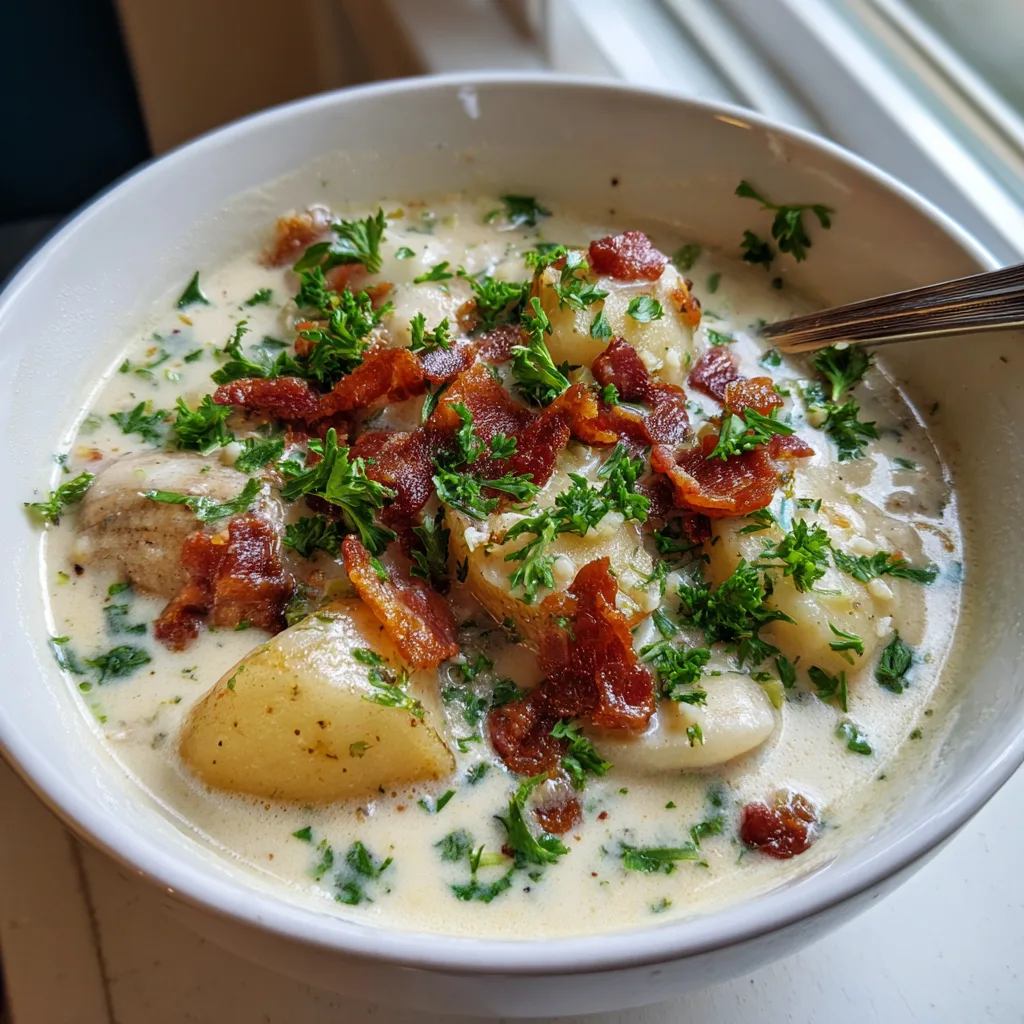
The History and Heritage of Clam Chowder
To truly appreciate the depths of a well-crafted clam chowder, it helps to understand its storied past. The word “chowder” itself is steeped in culinary history, likely derived from the French word “chaudière,” which refers to the large, heavy iron cauldrons used by fishermen along the coast of France to boil their daily catch into communal stews. When French, British, and Nova Scotian settlers arrived on the rocky shores of New England in the 17th and 18th centuries, they brought this tradition with them.
Faced with harsh winters and an abundance of local seafood—specifically the hard-shell clams known as quahogs—these early settlers adapted their rustic stews. Early iterations of chowder were actually quite different from what we enjoy today. They were layered affairs, consisting of salt pork, onions, hardtack (a dense, long-lasting biscuit used on ships), and clams. The hardtack was used to thicken the broth, creating a hearty meal that could sustain fishermen and their families through brutal Nor’easters.
As dairy farming became more prevalent in the region, milk and cream began to replace water and fish broth, leading to the birth of the New England Clam Chowder we know and love today. It became so beloved that it even sparked regional rivalries, most notably with Manhattan Clam Chowder, which eschews dairy entirely in favor of a clear, tomato-based broth. (In fact, in 1939, a Maine legislator actually introduced a bill proposing to make it illegal to put tomatoes in clam chowder!). A Gordon Ramsay inspired version stays true to the creamy New England roots while refining the technique to ensure maximum flavor extraction and the perfect silky texture.
What Makes the Gordon Ramsay Approach Special?
Gordon Ramsay is known worldwide for his uncompromising standards, his insistence on fresh, high-quality ingredients, and his mastery of fundamental cooking techniques. When applying his philosophy to clam chowder, several key elements stand out that elevate this recipe above the rest.
First is the foundation: the aromatics and the fat. Instead of just relying on butter, this recipe harnesses the immense savory power of bacon fat. By slowly rendering thick-cut bacon until perfectly crispy, you create a smoky, salty flavor base that permeates every single spoonful of the soup. The onions and celery are then sweated in this bacon fat, absorbing all that rich complexity.
Second is the careful management of the clams. Clams are delicate proteins; if boiled fiercely, they turn into unappetizing, rubbery erasers. The Ramsay-inspired method involves adding the chopped clams at the very end of the cooking process, allowing them to gently poach in the residual heat of the cream and broth. This ensures they remain sweet, tender, and succulent.
Finally, there is the texture. The thickening power comes from a carefully cooked roux (a mixture of fat and flour) combined with the natural starches released by the potatoes. The heavy cream is added at the end not just for richness, but to provide a velvety, luxurious finish that coats the back of a spoon without feeling heavy or claggy on the palate.
Key Ingredients Breakdown
Before you turn on the stove, let’s look at the components that make this dish sing. Quality matters here, so source the best ingredients you can find.
The Clams: While fresh, live cherrystone or quahog clams that you steam and shuck yourself are the gold standard, high-quality canned chopped clams are incredibly convenient and produce an excellent result. If using canned, do not discard the liquid! That clam juice is liquid gold and forms the flavor backbone of the broth.
The Potatoes: You want a potato that will hold its shape but also release a little bit of starch to help thicken the soup. Yukon Gold potatoes are widely considered the best choice for chowder. They have a buttery flavor and a waxy/starchy balance that prevents them from turning to mush, unlike Russets.
The Bacon: Thick-cut, applewood smoked bacon provides the necessary smoky, salty contrast to the sweet cream and briny clams. The crispy bits reserved for the garnish are essential for texture.
The Dairy: Heavy cream is non-negotiable for that authentic, luxurious New England texture. Half-and-half can be used in a pinch, but the soup will be thinner and lack the same mouthfeel. Avoid using regular milk, as it has a higher tendency to curdle when boiled with the salty clam juice.
The Aromatics: A classic mirepoix base of finely diced yellow onion and celery, along with a few cloves of minced garlic, fresh thyme, and a bay leaf, provides the aromatic depth that makes the soup taste complex and long-simmered.
Ingredients
Gather the following ingredients to create your masterpiece:
- – 6 slices thick-cut smoked bacon, chopped
- – 2 tablespoons unsalted butter
- – 1 large yellow onion, finely diced
- – 2 stalks celery, finely diced
- – 3 cloves garlic, minced
- – 1/4 cup all-purpose flour
- – 3 cans (6.5 oz each) chopped clams, juices separated and reserved
- – 1 cup bottled clam juice (or seafood stock/chicken broth if unavailable)
- – 1 1/2 lbs Yukon Gold potatoes, peeled and cut into 1/2-inch cubes
- – 1 cup heavy cream
- – 2 sprigs fresh thyme
- – 1 dried bay leaf
- – 1/2 teaspoon freshly ground black pepper (plus more to taste)
- – Salt to taste (be careful, as bacon and clams are salty)
- – 2 tablespoons fresh parsley, finely chopped (for garnish)
- – Oyster crackers, for serving
Instructions
Follow these steps meticulously to achieve the perfect consistency and flavor profile.
- Render the Bacon: Place a large heavy-bottomed pot or Dutch oven over medium heat. Add the chopped bacon and cook slowly, stirring occasionally. You want the fat to render out completely and the bacon to become deeply browned and crispy. This should take about 8 to 10 minutes. Once crispy, use a slotted spoon to remove the bacon bits to a paper towel-lined plate. Leave the flavorful bacon fat in the pot.
- Sauté the Aromatics: Reduce the heat to medium-low. Add the unsalted butter to the bacon fat. Once the butter has melted and is foaming, add the diced onion and celery. Cook for 5 to 7 minutes, stirring frequently, until the onions are translucent and softened, but not browned. Add the minced garlic and cook for 1 more minute until fragrant.
- Create the Roux: Sprinkle the all-purpose flour evenly over the softened vegetables. Stir constantly with a wooden spoon for 1 to 2 minutes. This cooks the raw flour taste out and creates a paste that will thicken your chowder perfectly. It should smell slightly nutty.
- Build the Broth: Gradually whisk in the reserved juice from the canned clams, along with the extra 1 cup of bottled clam juice. Pour slowly and whisk continuously to prevent any lumps from forming. The mixture will immediately begin to thicken.
- Simmer the Potatoes: Add the cubed Yukon Gold potatoes, the fresh thyme sprigs, the bay leaf, and the black pepper. Bring the mixture to a gentle boil, then immediately reduce the heat to a low simmer. Cover the pot with a lid and let it cook for 15 to 20 minutes, or until the potatoes are fork-tender.
- Add the Cream and Clams: Once the potatoes are tender, remove and discard the thyme stems and the bay leaf. Stir in the heavy cream and the chopped clams. Allow the soup to heat through gently for about 3 to 5 minutes. Crucial step: Do not let the soup boil once the cream and clams are added, or the cream may separate and the clams will become tough.
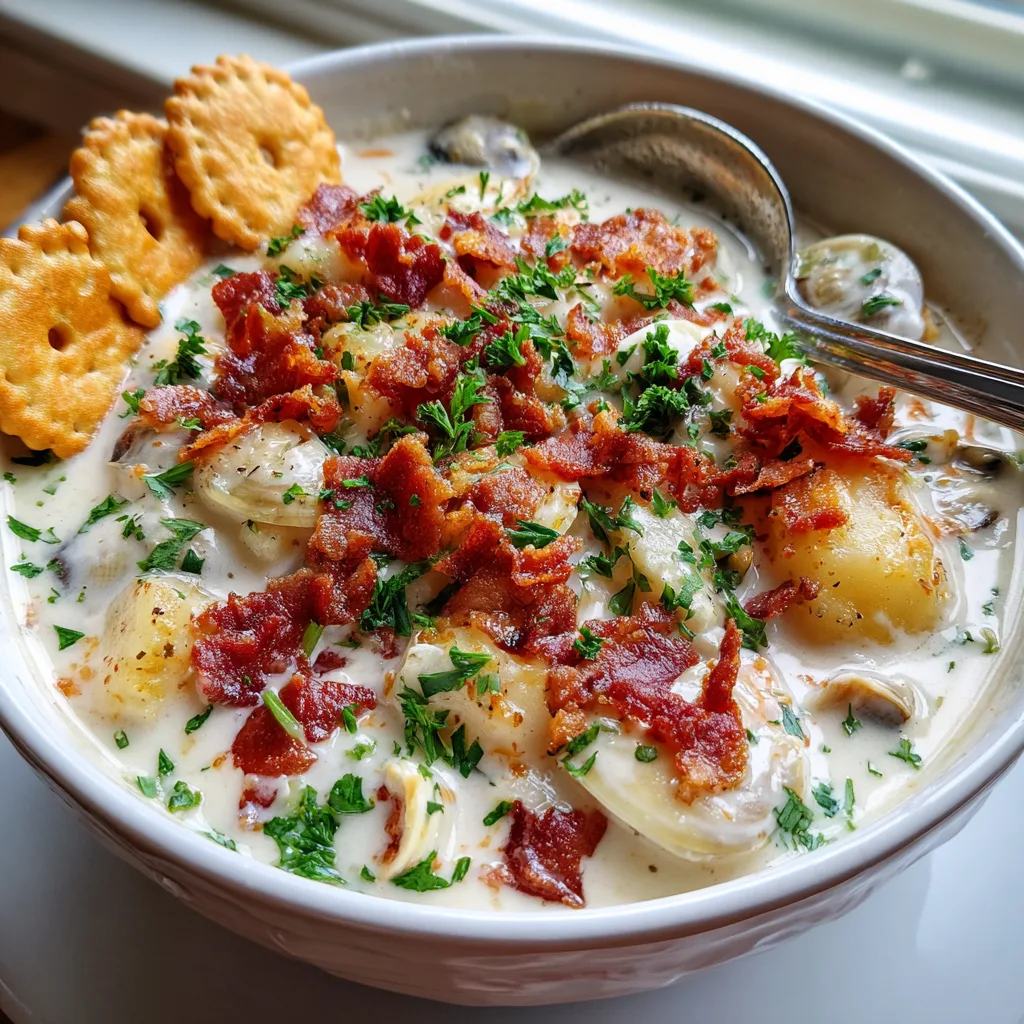
- Season and Serve: Taste the chowder and adjust the seasoning. You will likely not need much salt due to the clam juice and bacon, but you may want more black pepper. Ladle the hot, steaming chowder into deep bowls. Garnish generously with the reserved crispy bacon bits, fresh chopped parsley, and serve immediately with a side of oyster crackers.
Pro Tips for the Perfect Clam Chowder Consistency
The hallmark of an incredible chowder is its texture. If you find your chowder is too thin for your liking, do not panic. Take a ladleful of the hot broth and place it in a small bowl. Whisk in a tablespoon of cornstarch until perfectly smooth, then pour the slurry back into the simmering pot and stir until thickened. Conversely, if your chowder is too thick (like a dip), simply thin it out with a splash of extra milk, cream, or clam juice until it reaches your desired consistency.
Another chef secret involves the potatoes. For an even thicker, more rustic texture, you can use a potato masher to lightly mash some of the potatoes right in the pot before adding the cream. This releases more natural potato starch into the broth, giving it a wonderfully hearty, homemade feel.
What to Serve with Clam Chowder
While a bowl of this chowder is a meal in itself, pairing it with the right sides can elevate your dining experience to restaurant quality. Oyster crackers are the traditional, non-negotiable accompaniment. Their salty, crunchy texture provides the perfect contrast to the creamy soup. Simply scatter them on top right before eating so they don’t get soggy.
A crusty loaf of warm sourdough bread or a freshly baked French baguette is also phenomenal for dipping and wiping the bowl clean. The slight tang of sourdough pairs beautifully with the rich, dairy-heavy soup. If you want to cut through the richness, serve the chowder alongside a crisp, acidic salad—think mixed greens with a sharp lemon vinaigrette, shaved fennel, and green apples.
Storage and Reheating Advice
Clam chowder is notorious for being tricky to store and reheat because dairy-based soups have a tendency to separate or curdle when subjected to temperature changes. If you have leftovers, allow the soup to cool completely before transferring it to an airtight container. Store it in the refrigerator for up to 3 days.
When reheating, patience is your best friend. Do not use the microwave if you can avoid it, as the rapid, uneven heat will almost certainly cause the cream to break. Instead, place the soup in a saucepan over low heat on the stove. Stir it gently and frequently until it is just heated through. Do not let it come to a boil.
Can you freeze clam chowder? It is generally not recommended. Potatoes tend to become grainy and mealy when frozen and thawed, and heavy cream will separate, leaving you with a grainy, unappetizing texture. This soup is best enjoyed fresh or refrigerated for a few days.
Creative Variations
Once you have mastered this base recipe, there are several delicious ways to customize your chowder.
Corn and Clam Chowder: The sweetness of corn pairs exceptionally well with clams. Add a cup of fresh or frozen sweet corn kernels at the same time you add the potatoes for a vibrant, summery twist.
Seafood Chowder: Why stop at clams? You can turn this into an opulent seafood extravaganza by adding chunks of firm white fish (like cod or halibut), raw shrimp, or even chunks of lobster meat during the final 5 minutes of cooking.
Spicy Chowder: If you like a little heat, add a pinch of cayenne pepper or a dash of hot sauce (like Tabasco or a Louisiana-style hot sauce) right at the end. The vinegar and chili heat cut through the rich cream beautifully.
Conclusion
Mastering a Gordon Ramsay inspired clam chowder recipe is a culinary triumph that will reward you time and time again. By respecting the ingredients—rendering the bacon properly, utilizing the briny clam juice, treating the clams delicately, and achieving the perfect velvety texture with heavy cream—you transform everyday ingredients into a bowl of pure, unadulterated comfort. So, grab your soup pot, gather your ingredients, and get ready to create a chowder that will warm your soul and impress anyone lucky enough to share a table with you. Bon appétit!
Gordon Ramsay Style Clam Chowder
Ingredients
Equipment
Method
- In a large pot over medium heat, cook the chopped bacon until the fat renders and the bacon is crispy. Remove bacon with a slotted spoon and set aside, leaving the fat in the pot.
- Reduce heat to medium-low. Add butter to the bacon fat. Once melted, add diced onions and celery. Cook until softened, about 5-7 minutes. Add minced garlic and cook 1 minute more.
- Sprinkle the flour over the vegetables and stir constantly for 1-2 minutes to cook the raw flour taste out.
- Gradually whisk in the reserved clam juice from the cans and the bottled clam juice until smooth and thickened.
- Add the cubed potatoes, thyme sprigs, bay leaf, and black pepper. Bring to a gentle boil, then reduce heat, cover, and simmer for 15-20 minutes until potatoes are tender.
- Remove thyme stems and bay leaf. Stir in the heavy cream and chopped clams. Heat gently for 3-5 minutes without letting it boil.
- Taste and adjust seasoning. Ladle into bowls and top with reserved crispy bacon, fresh parsley, and oyster crackers.