Gâteaux Bundt au citron et à la lavande
The Ultimate Recipe for Mini Lemon Lavender Bundt Cakes
There is something undeniably magical about the combination of bright, zesty citrus and delicate, fragrant florals. When you bring these elements together in the form of elegant miniature cakes, you create a dessert that is as visually stunning as it is delicious. These Mini Lemon Lavender Bundt Cakes are the perfect embodiment of spring and summer baking. With their tender, moist crumb, vibrant lemon flavor, and subtle hints of culinary lavender and rosemary, they are guaranteed to steal the show at your next tea party, bridal shower, or weekend family gathering.
Baking miniature desserts offers a unique satisfaction. Not only do they bake faster than traditional full-sized cakes, but they also provide built-in portion control and an inherently elegant presentation. The fluted edges of a mini bundt pan create beautiful ridges that are practically begging to be drenched in a sweet, glossy glaze. In this comprehensive guide, we will dive deep into the art of making the perfect mini bundt cakes, from mastering the botanical flavor profile to achieving that flawless, bakery-style crumb.
Why You Will Fall in Love With These Mini Bundt Cakes
If you have never baked with culinary lavender before, this recipe is the perfect introduction. Many people hesitate to use floral ingredients, fearing their baked goods might end up tasting like perfume or soap. However, the secret lies in balance. The sharp, acidic bite of fresh lemon juice and zest perfectly cuts through the floral notes, creating a harmonious blend that dances on the palate.
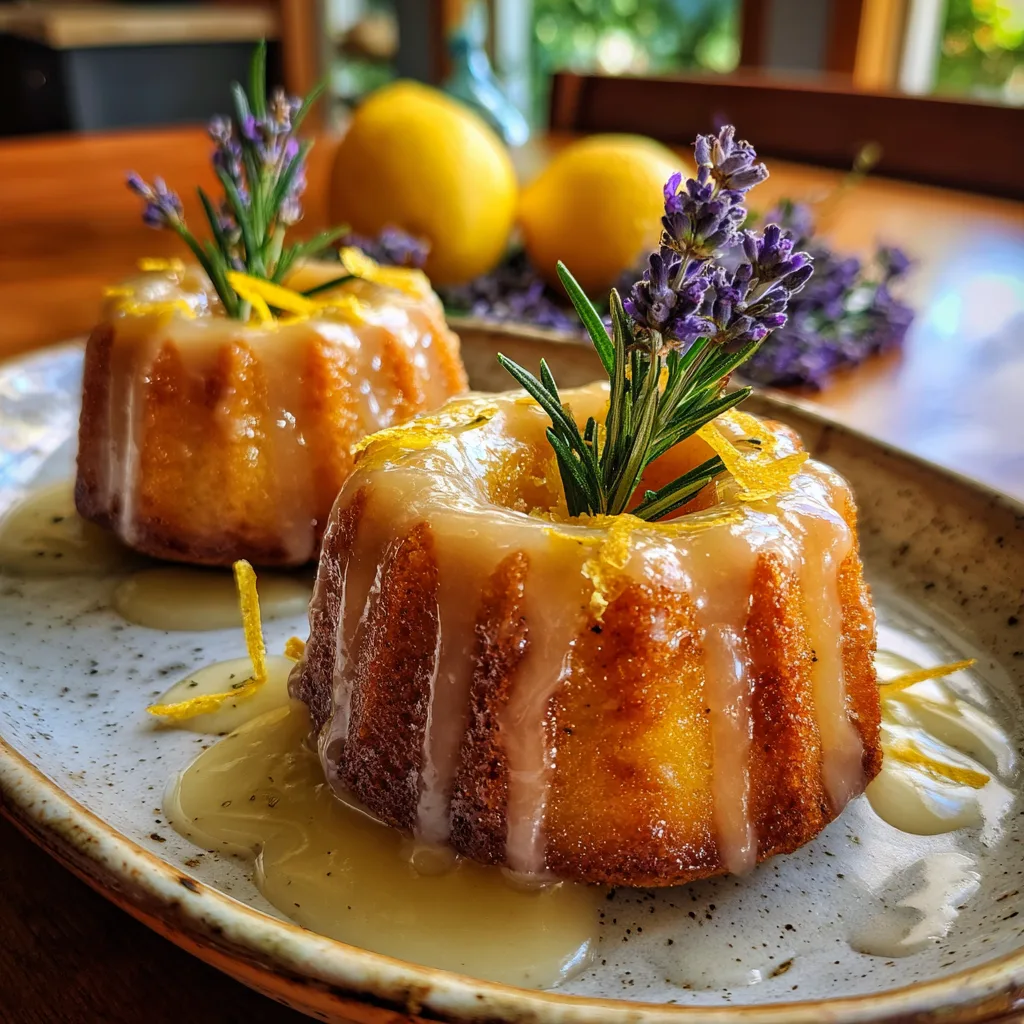
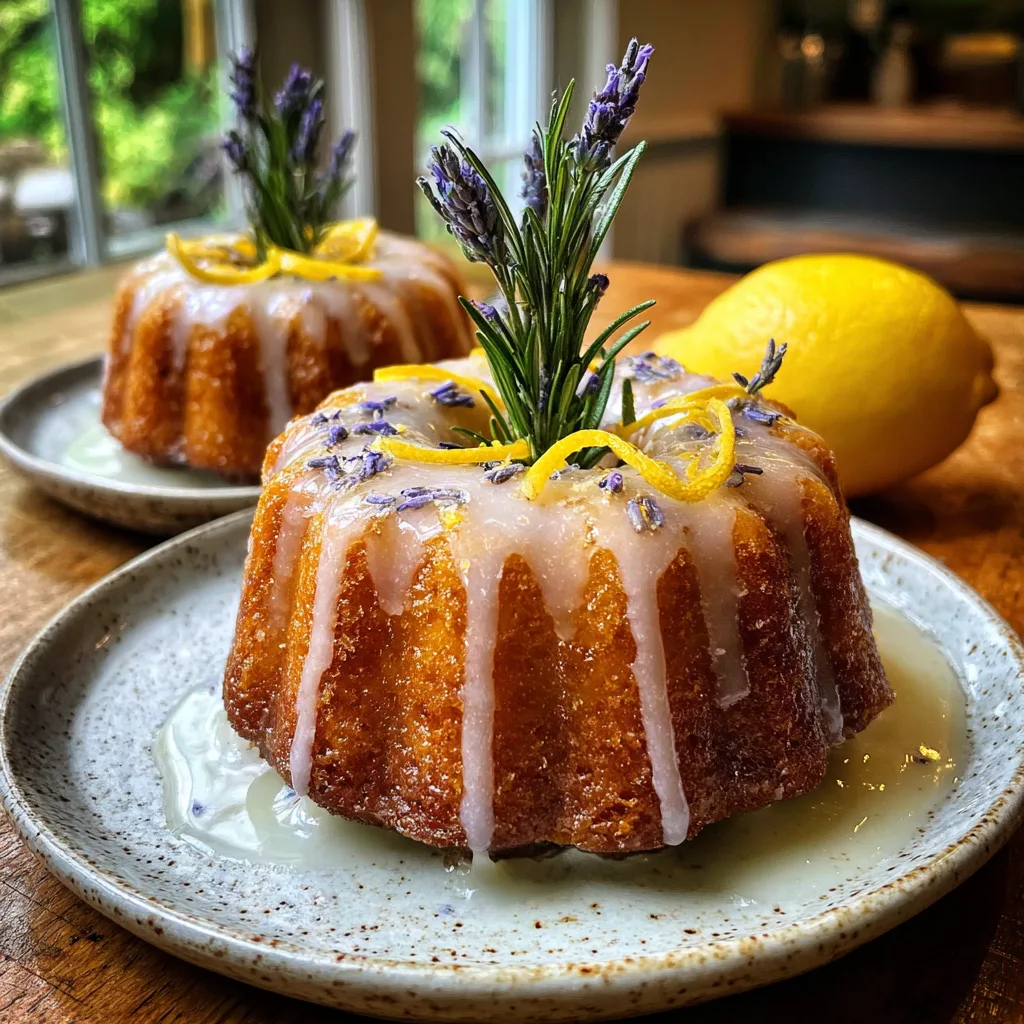
Furthermore, these cakes boast an incredibly moist texture. By utilizing ingredients like full-fat buttermilk (or a rich cream and milk mixture) and generous amounts of butter, the cakes remain incredibly soft for days. The addition of the glossy lemon glaze not only adds a punch of sweetness but also acts as a seal, locking in the moisture of the cake underneath. The visual appeal is off the charts; the thick, translucent glaze dripping down the sides, topped with rustic sprigs of fresh rosemary and vibrant purple lavender flowers, makes these cakes look like they came straight from a high-end European patisserie.
The Magic of Flavor Pairing: Lemon, Lavender, and Rosemary
Understanding flavor profiles is crucial for elevating your home baking. Lemon is a universal favorite in desserts because its acidity brightens rich, buttery batters. The zest contains essential oils that provide a deep, aromatic lemon flavor without throwing off the liquid ratio of the batter.
Lavender, when used correctly, adds a sophisticated, slightly herbaceous, and sweet floral note. It is essential to source “culinary grade” lavender. Standard ornamental lavender can be overly pungent and bitter. Culinary lavender (often English lavender varieties like Lavandula angustifolia) has a sweeter, much softer profile. To extract the best flavor, we gently infuse it into the sugar or the liquid components of the recipe.
You might be wondering about the rosemary garnish seen in the beautiful presentation of these cakes. While primarily a striking visual element that contrasts beautifully with the purple lavender, rosemary shares flavor compounds with lavender (both are members of the mint family). A tiny hint of finely crushed rosemary in the batter or glaze can add an unexpected, savory depth that pairs beautifully with the sweet lemon, though keeping it strictly as a stunning garnish works perfectly as well.
Essential Ingredients for the Perfect Crumb
To achieve the ultimate texture and flavor, gather the following high-quality ingredients. Always ensure your cold ingredients (eggs, butter, milk) have reached room temperature before beginning to ensure a smooth, emulsified batter.
For the Cake Batter:
- – 1 1/2 cups all-purpose flour: Measured correctly using the spoon-and-level method to avoid dense cakes.
- – 1 teaspoon baking powder: The primary leavening agent for a light, fluffy rise.
- – 1/4 teaspoon baking soda: Helps neutralize the acid from the lemon and buttermilk.
- – 1/2 teaspoon kosher salt: Essential for balancing the sweetness and enhancing the floral notes.
- – 1/2 cup (1 stick) unsalted butter, softened: Provides richness and a tender crumb.
- – 3/4 cup granulated white sugar: Sweetens the cake and helps achieve a golden crust.
- – 1 tablespoon dried culinary lavender buds: Finely crushed to release their oils.
- – 2 large eggs, room temperature: Binds the ingredients and provides structure.
- – 1 teaspoon pure vanilla extract: Adds background depth.
- – 2 tablespoons fresh lemon zest: Packed with essential oils for maximum citrus flavor.
- – 2 tablespoons fresh lemon juice: Adds brightness and reacts with the baking soda.
- – 1/2 cup whole buttermilk, room temperature: Adds moisture and a slight tang that complements the lemon.
For the Glossy Lemon Glaze:
- – 1 1/2 cups powdered sugar, sifted: For a completely smooth, lump-free glaze.
- – 2 to 3 tablespoons fresh lemon juice: Adjust based on desired thickness.
- – 1/2 teaspoon vanilla extract or lemon extract: For an extra flavor boost.
- – Fresh lavender sprigs, rosemary sprigs, and lemon zest curls for garnish.
Step-by-Step Instructions for Flawless Mini Cakes
Follow these detailed steps to ensure your mini bundt cakes turn out perfectly every single time, from the mixing bowl to the final glossy drizzle.
- Prepare your equipment and oven: Preheat your oven to 350 degrees Fahrenheit (175 degrees Celsius). Thoroughly prepare a 6-cavity mini bundt pan. Even if your pan is non-stick, it is highly recommended to brush the insides generously with melted butter or a high-quality baking spray that includes flour. Make sure to get into every single crevice so the detailed fluted designs release flawlessly.
- Infuse the lavender sugar: In a small bowl or food processor, combine the granulated sugar and the dried culinary lavender buds. Pulse them together a few times, or rub them together vigorously with your fingers. The friction helps release the natural oils from the lavender into the sugar, ensuring a deeply infused, even flavor throughout the batter.
- Combine the dry ingredients: In a medium-sized mixing bowl, whisk together the all-purpose flour, baking powder, baking soda, and kosher salt. Set this aside.
- Cream the butter and sugar: In the bowl of a stand mixer fitted with the paddle attachment, or using a large bowl and a hand mixer, beat the softened unsalted butter and the lavender-infused sugar on medium-high speed. Beat for about 3 to 4 minutes until the mixture becomes pale, light, and incredibly fluffy. This step incorporates air into the batter, which is crucial for a tender crumb.
- Add the eggs and flavorings: Reduce the mixer speed to medium. Add the room temperature eggs one at a time, beating well after each addition and scraping down the sides of the bowl with a rubber spatula as needed. Add the vanilla extract, fresh lemon zest, and fresh lemon juice, mixing until just combined. The mixture might look slightly curdled at this point due to the acid, but that is completely normal.
- Incorporate the dry and wet ingredients: With the mixer on its lowest speed, add one-third of the dry flour mixture to the bowl, mixing just until combined. Pour in half of the buttermilk. Add another third of the flour, followed by the remaining buttermilk. Finally, add the last of the flour. Mix only until the last streak of flour disappears. Do not overmix, or your cakes will become tough and dense.
- Fill the pans and bake: Divide the batter evenly among the prepared mini bundt cavities, filling each about two-thirds to three-quarters full. Smooth the tops with a small spoon. Tap the pan firmly on the kitchen counter a few times to release any trapped air bubbles. Bake in the preheated oven for 18 to 22 minutes, or until a toothpick inserted into the center of a cake comes out clean or with a few moist crumbs.
- Cooling process: Allow the cakes to cool in the pan for exactly 10 minutes. This resting period allows the cakes to firm up slightly so they don’t break, but they are still warm enough to release from the pan easily. Invert the pan onto a wire cooling rack and gently tap to release the cakes. Allow them to cool completely to room temperature before applying the glaze.
- Prepare the glossy glaze: While the cakes cool, whisk together the sifted powdered sugar, 2 tablespoons of fresh lemon juice, and vanilla extract in a small bowl. Whisk vigorously until smooth. If the glaze is too thick, add more lemon juice a few drops at a time. You want a consistency that is thick but pourable—like liquid glass.
- Glaze and garnish: Place the wire rack with the cooled cakes over a baking sheet lined with parchment paper to catch the drips. Spoon the glossy glaze generously over the top of each cake, allowing it to drip down the fluted sides naturally. Before the glaze sets, garnish the center of each cake with a fresh sprig of lavender, a small piece of rosemary, and scattered curls of fresh lemon zest.
Pro Tips for Baking with Floral Flavors
Working with botanicals like lavender requires a delicate touch. Always err on the side of caution; you can always add a bit more next time, but you cannot take it away if the flavor becomes overwhelming. When measuring dried lavender, use exactly what the recipe calls for. If you cannot find culinary dried lavender, you can occasionally use a drop or two of food-grade lavender essential oil, but proceed with extreme caution as it is highly concentrated.
To enhance the lemon flavor without adding more liquid, maximize your use of lemon zest. Use a microplane grater to remove only the bright yellow outer layer of the lemon peel. The white pith underneath is incredibly bitter and will negatively impact the flavor of your delicate mini cakes.
How to Achieve the Perfect Glossy Lemon Glaze
The glaze is what transforms these mini bundt cakes from simple muffins into show-stopping desserts. The secret to a truly glossy glaze that sets up beautifully is twofold: shifting your powdered sugar and getting the liquid ratio exactly right. Sifting prevents lumps that can ruin the smooth, glass-like finish.
When mixing, the glaze should look almost too thick at first. You want it to fall off your spoon in thick, slow ribbons. If it is too thin, it will simply soak into the cake or run entirely off the sides, leaving you with a dull finish. If you accidentally make it too thin, just whisk in a bit more sifted powdered sugar. For maximum gloss, apply the glaze when the cakes are completely cooled; applying glaze to a warm cake will cause it to melt and become transparent.
Creative Variations and Substitutions
While lemon and lavender are a match made in heaven, this versatile mini bundt cake recipe can serve as a canvas for many other flavor profiles. If you are not a fan of lavender, simply omit it and increase the vanilla extract for a classic, perfect mini lemon pound cake. You could also substitute the lavender with a tablespoon of finely chopped fresh thyme or basil for a different herbaceous twist.
If you prefer different citrus fruits, this recipe works beautifully with fresh oranges, grapefruits, or limes. Simply substitute the lemon zest and juice with the zest and juice of your chosen citrus fruit. A blood orange variation with a naturally pink glossy glaze is incredibly striking.
Storage and Freezing Guidelines
Because these cakes are incredibly moist, they store beautifully. Keep the glazed cakes in an airtight container at room temperature for up to 3 days. If your kitchen is particularly warm, you can store them in the refrigerator for up to 5 days, though refrigerating baked goods can sometimes dry them out slightly. Bring them back to room temperature before serving.
If you want to bake these in advance, they freeze exceptionally well. It is best to freeze the cakes unglazed. Wrap each completely cooled mini bundt cake tightly in plastic wrap, then place them in a freezer-safe zip-top bag. Freeze for up to 3 months. Thaw overnight on the counter, and then prepare and apply the fresh glossy glaze just before serving.
Frequently Asked Questions (FAQ)
Why did my mini bundt cakes stick to the pan?
Sticking is usually the result of inadequate greasing or trying to remove the cakes while they are still too hot. Be incredibly thorough when preparing your pan, brushing butter or baking spray into every single groove. Also, stick to the 10-minute cooling rule before inverting.
Can I make this as one large bundt cake?
Yes! You can easily adapt this batter for a standard 10-cup to 12-cup bundt pan. You will need to double the recipe to ensure the pan is adequately filled. The baking time will also increase significantly, likely to 45-55 minutes. Always test with a long skewer to ensure the center is fully baked.
What can I use if I don’t have buttermilk?
You can easily make a buttermilk substitute at home. Measure 1/2 tablespoon of white vinegar or lemon juice into a liquid measuring cup. Add enough whole milk to reach the 1/2 cup line. Stir gently and let it sit for 5 to 10 minutes until it slightly curdles and thickens. It is now ready to use in your batter!
Baking is a science, but it is also an art. The combination of the precise chemical reactions that create the perfect crumb, alongside the artistic, rustic presentation of the glistening glaze and fresh botanical garnishes, makes these Mini Lemon Lavender Bundt Cakes a truly special project. Whether you are an experienced baker looking for a new flavor profile to explore or a beginner wanting to impress your friends, this detailed guide will ensure your success in the kitchen. Enjoy the bright, floral flavors and the unparalleled satisfaction of creating something beautiful from scratch.
Mini Lemon Lavender Bundt Cakes
Ingredients
Equipment
Method
- Preheat oven to 350°F (175°C). Generously grease a 6-cavity mini bundt pan with butter or baking spray with flour.
- In a small bowl, rub the granulated sugar and dried culinary lavender together until fragrant.
- Whisk together the flour, baking powder, baking soda, and salt in a medium bowl.
- In a large bowl, cream the softened butter and lavender-infused sugar until light and fluffy (about 3-4 minutes).
- Beat in the eggs one at a time, followed by the vanilla, lemon zest, and lemon juice.
- Alternate adding the dry ingredients and buttermilk, beginning and ending with the dry ingredients. Mix until just combined.
- Divide batter evenly among the prepared mini bundt cavities. Tap pan on counter to remove air bubbles.
- Bake for 18-22 minutes until a toothpick comes out clean. Cool in pan for 10 minutes before turning out onto a wire rack to cool completely.
- For the glaze, whisk the sifted powdered sugar, lemon juice, and vanilla until smooth and glossy. Drizzle over cooled cakes and garnish immediately with herbs and zest.