Spring Roll Salad
Ultimate Spring Roll Salad with Peanut Dressing: A Vibrant and Healthy Bowl
Welcome to your new favorite meal: the Ultimate Spring Roll Salad with Peanut Dressing. If you have ever craved the fresh, vibrant, and crunchy flavors of a traditional fresh spring roll but lacked the time or patience to soak and roll delicate rice paper wrappers, this recipe is an absolute game-changer. This vibrant bowl takes all the beloved components of a classic fresh spring roll—chewy rice vermicelli noodles, crisp shredded vegetables, and fragrant fresh herbs—and transforms them into a hearty, satisfying, and effortless salad. Topped with a rich, creamy, and deeply savory peanut dressing, this dish delivers an explosion of flavors and textures in every single bite. Whether you are searching for a quick weeknight dinner, a reliable meal-prep option for busy workdays, or a colorful centerpiece for your next potluck, this spring roll salad hits every mark. It is naturally vegan, easily adaptable for gluten-free diets, and bursting with wholesome ingredients that will leave you feeling energized and nourished.
What Exactly is a Spring Roll Salad?
The concept of a “deconstructed” meal has gained immense popularity in recent years, and for good reason. A spring roll salad is exactly what it sounds like: a deconstructed fresh spring roll. Traditional fresh spring rolls (often referred to as summer rolls or salad rolls) have roots in Vietnamese cuisine, where they are known as Gỏi cuốn. They typically consist of pork, prawn, vegetables, bún (rice vermicelli), and other ingredients wrapped in Vietnamese bánh tráng (rice paper). While wrapping them is a beautiful culinary art, it can be time-consuming and sometimes frustrating if the wrappers tear.
A spring roll salad bypasses the wrapping process entirely. Instead, all the fillings are generously layered in a large bowl. This not only saves significant preparation time but also allows you to control the ratio of ingredients in each bite. You are not limited by the structural integrity of a rice paper wrapper, meaning you can load up on extra veggies, double the herbs, and pour on as much dressing as your heart desires. The result is a massive, satisfying bowl of textures ranging from the soft, slurpable noodles to the intense crunch of raw vegetables and roasted peanuts.
Why You Will Fall in Love with This Recipe
There are countless reasons why this Spring Roll Salad with Peanut Dressing deserves a permanent spot in your culinary rotation. First and foremost is the sheer convenience. Slicing vegetables and boiling noodles takes a fraction of the time compared to individually rolling a dozen spring rolls. This makes it an incredibly approachable recipe for beginner cooks and busy professionals alike.
Secondly, the nutritional profile is outstanding. This salad is a rainbow in a bowl, which nutritionists constantly advise us to strive for. The diverse colors of the vegetables represent a wide array of vitamins, minerals, and antioxidants. Red cabbage provides anthocyanins, carrots are loaded with beta-carotene, and fresh herbs offer unique phytonutrients. It is a fibrous, gut-friendly meal that promotes satiety without leaving you feeling sluggish.
Thirdly, it is incredibly meal-prep friendly. The components of this salad hold up exceptionally well in the refrigerator when stored properly. You can prep a massive batch of vegetables, cook your noodles, and blend your dressing on a Sunday, ensuring you have healthy, delicious lunches ready to assemble in seconds throughout the week.
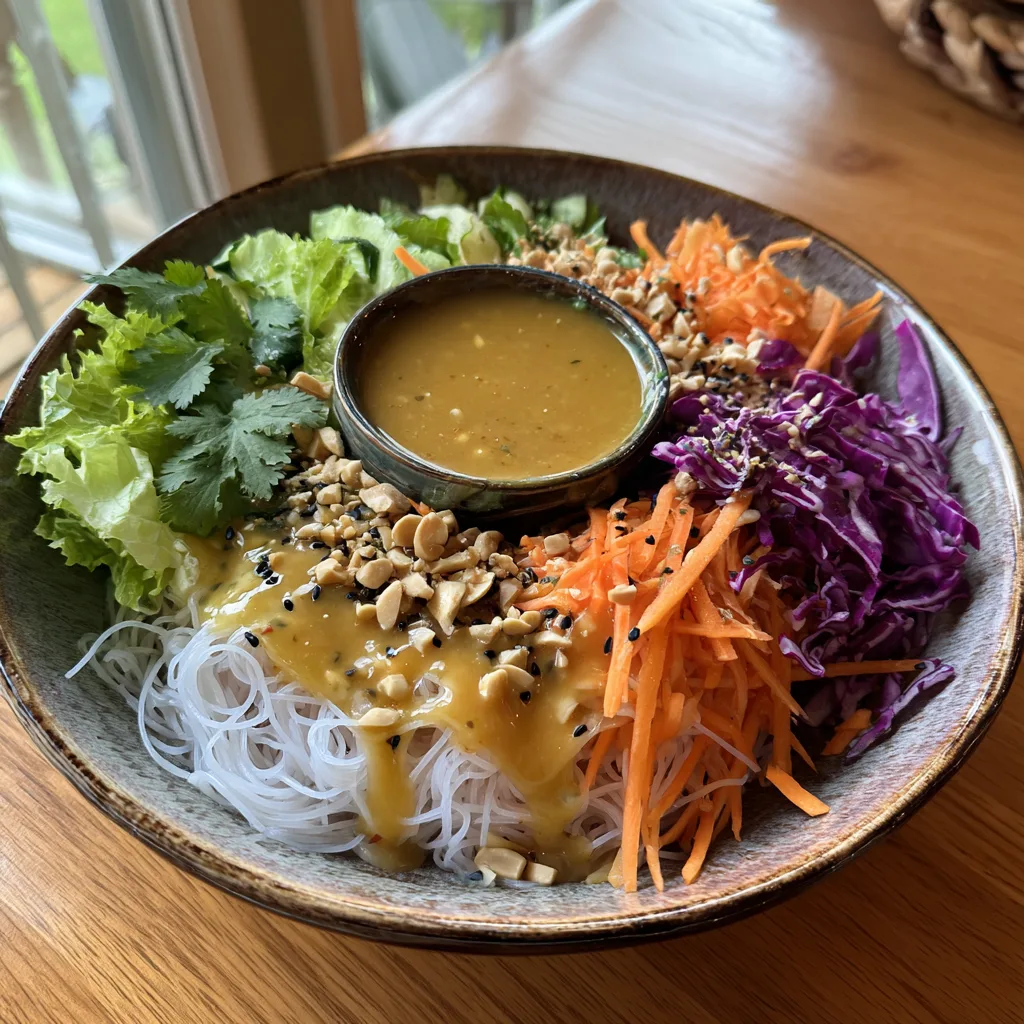
Deep Dive: Breaking Down the Ingredients
To truly appreciate this salad, it is essential to understand the role each ingredient plays. The magic of this dish lies in the harmony of its textures and the freshness of its components.
The Noodle Base: Rice Vermicelli
Thin rice noodles, often called vermicelli or bún, form the comforting base of this salad. Unlike heavy wheat pastas, rice noodles are light, naturally gluten-free, and absorb flavors beautifully. When cooked properly, they offer a delightful chewy texture that contrasts perfectly with the crunchy vegetables. They also act as a vehicle, catching and holding the creamy peanut dressing so every bite is fully flavored.
The Crunchy Vegetables: Carrots, Cabbage, and Greens
The crunch factor is non-negotiable in a spring roll salad. Shredded carrots provide a subtle earthiness and natural sweetness, alongside a bright pop of orange. Purple cabbage (or red cabbage) is crucial for both its rigid, satisfying crunch and its stunning jewel-toned color. It holds up incredibly well against heavy dressings without getting soggy. Finally, a bed of crisp greens—such as shredded romaine lettuce, baby spinach, or mixed spring greens—adds volume and a refreshing, watery crispness that lightens the overall dish.
The Flavor Powerhouses: Fresh Herbs
You cannot make a proper spring roll salad without a generous handful of fresh herbs. Herbs are not just a garnish here; they are a primary flavor component. Cilantro adds a bright, citrusy, and slightly peppery punch. If you have the genetic trait that makes cilantro taste like soap, fear not! You can easily substitute it with fresh mint, Thai basil, or a combination of both. Mint brings a cooling sensation, while Thai basil offers an anise-like, spicy sweetness that elevates the entire flavor profile to restaurant-quality heights.
The Toppings: Peanuts and Sesame Seeds
To finish the salad, textural contrast is key. Roasted, salted peanuts are roughly chopped and scattered over the top. They echo the flavors of the dressing while providing a necessary hard crunch. Black sesame seeds offer a subtle nuttiness and a beautiful visual contrast against the vibrant vegetables and pale noodles.
The Secret is in the Sauce: Mastering the Peanut Dressing
While the fresh ingredients are delightful, the peanut dressing is undeniably the star of the show. A great peanut dressing should hit multiple flavor notes: savory, sweet, tangy, and a little spicy. It brings the entire bowl together, transforming raw vegetables and plain noodles into an addictive, cohesive meal.
The base is, of course, creamy peanut butter. Always opt for natural peanut butter where the only ingredients are peanuts and salt. Conventional peanut butters with added oils and sugars can make the dressing too sweet and artificially thick. Soy sauce (or tamari for a gluten-free option) provides the necessary umami and saltiness. Rice vinegar cuts through the richness of the peanut butter with a sharp, bright acidity. A touch of maple syrup or agave nectar balances the acidity and salt with a mellow sweetness. Toasted sesame oil is a crucial ingredient; even just a teaspoon adds an immense depth of roasted, nutty flavor. Finally, fresh minced garlic and ginger bring an aromatic heat, while a splash of warm water helps thin the dressing to a perfectly pourable consistency.
Ingredients You Will Need
For the Spring Roll Salad:
- – 8 oz thin rice vermicelli noodles
- – 2 cups purple cabbage, thinly shredded
- – 2 cups carrots, julienned or shredded
- – 3 cups romaine lettuce or mixed greens, chopped
- – 1 cup fresh cilantro leaves, roughly chopped (or mint/basil)
- – 1/2 cup roasted peanuts, roughly chopped
- – 1 tablespoon black or white sesame seeds
For the Peanut Dressing:
- – 1/2 cup natural creamy peanut butter
- – 3 tablespoons soy sauce (or tamari)
- – 2 tablespoons rice vinegar
- – 1 tablespoon maple syrup or agave nectar
- – 1 tablespoon toasted sesame oil
- – 1 clove garlic, finely minced
- – 1 teaspoon fresh ginger, grated
- – 3 to 4 tablespoons warm water (to thin)
- – Optional: 1 teaspoon sriracha or chili flakes for heat
Step-by-Step Instructions
- Cook the Noodles: Bring a large pot of water to a boil. Remove from heat and submerge the rice vermicelli noodles in the hot water. Let them sit for 3 to 5 minutes, or according to package instructions, until tender but still slightly chewy. Drain the noodles immediately and rinse them thoroughly under cold running water. This stops the cooking process and removes excess starch, preventing them from clumping together. Set aside to drain completely.
- Prepare the Vegetables: While the water is boiling, prepare your vegetables. Thinly slice the purple cabbage, julienne or shred the carrots, and chop the lettuce. Rough chop the cilantro and the peanuts. Keeping the cuts uniform helps ensure a perfect mix of ingredients in every bite.
- Whisk the Peanut Dressing: In a medium-sized mixing bowl or a glass jar, combine the natural peanut butter, soy sauce, rice vinegar, maple syrup, toasted sesame oil, minced garlic, grated ginger, and sriracha (if using). Whisk vigorously. The mixture may seize up and look thick initially. Gradually add the warm water, one tablespoon at a time, whisking continuously until the dressing reaches a smooth, creamy, and pourable consistency.
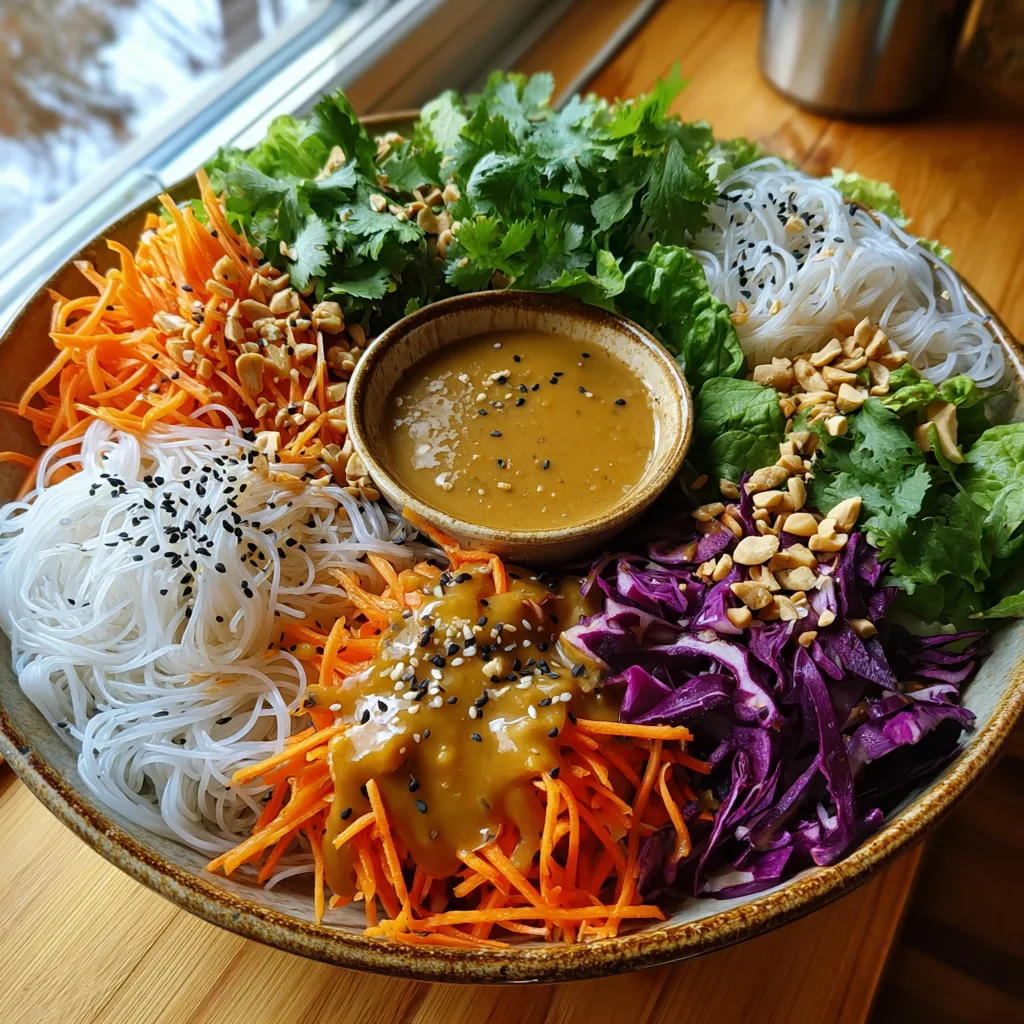
- Assemble the Salad: In a very large serving bowl, or divided among individual meal-prep containers, lay down a base of the chopped lettuce. Add a generous portion of the cooked and cooled rice noodles. Arrange the shredded purple cabbage and carrots in vibrant sections over the noodles.
- Garnish and Dress: Sprinkle the freshly chopped cilantro, crushed roasted peanuts, and sesame seeds generously over the top of the bowl.
- Serve: You can either drizzle the peanut dressing over the entire salad immediately before serving and toss well, or serve the dressing on the side in a small bowl, allowing everyone to add their desired amount.
Pro Tips for the Best Noodle Salad Experience
Creating the perfect spring roll salad is simple, but a few expert tricks can elevate it from good to spectacular.
Preventing Sticky Noodles: Rice noodles are notorious for clumping into a giant, unmanageable mass. The key to preventing this is the cold water rinse. Rinse them until they are completely cool to the touch. If you are preparing the noodles ahead of time and they still seem to stick, toss them with a tiny drop of sesame oil before storing them.
The Art of Shredding: The texture of this salad relies heavily on how the vegetables are prepped. Avoid chunky, thick cuts. Use a mandoline slicer for the cabbage to get it paper-thin, and a julienne peeler for the carrots. This ensures the vegetables mix easily with the delicate noodles rather than overpowering them.
Dressing Consistency: Natural peanut butters vary wildly in thickness depending on the brand and how well they are stirred. Do not be afraid to adjust the water in the dressing recipe. You want a consistency similar to heavy cream—thick enough to coat the ingredients, but thin enough to pour easily.
Creative Variations and Delicious Add-Ins
One of the greatest joys of a deconstructed spring roll salad is its versatility. You can use this recipe as a blank canvas to clear out your refrigerator or cater to specific dietary needs.
Boost the Protein: While the peanuts offer some protein, adding a main protein source turns this salad into a heavy-duty dinner. Crispy pan-fried tofu cubes tossed in a little soy sauce are a phenomenal vegan option. If you eat meat, grilled shrimp, shredded rotisserie chicken, or sliced grilled flank steak pair wonderfully with the peanut flavors.
Switch Up the Veggies: Don’t limit yourself to cabbage and carrots. Thinly sliced bell peppers (red, yellow, or orange) add sweetness. Sliced cucumbers add a massive refreshing crunch. Edamame beans or bean sprouts are also fantastic, authentic additions that bulk up the meal.
Allergy Alternatives: If you have a peanut allergy, you do not have to miss out on this incredible dressing. Almond butter, cashew butter, or even sunflower seed butter make excellent one-to-one substitutes for the peanut butter. Swap the chopped peanuts on top for toasted slivered almonds or roasted sunflower seeds.
Serving Suggestions
This Spring Roll Salad is a complete meal on its own, but it also shines as a side dish or part of a larger Asian-inspired feast. Serve it alongside Thai green curry, Vietnamese pho, or simple grilled skewers. If you are hosting a dinner party, consider setting up a “Spring Roll Salad Bar.” Arrange the noodles, greens, and all the various chopped vegetables and proteins in separate bowls. Put the peanut dressing in a squeeze bottle, and let your guests build their own custom bowls. It is interactive, fun, and ensures everyone gets exactly what they want.
How to Store and Meal Prep Like a Pro
If you are making this for meal prep, storage technique is vital to prevent a soggy salad.
Store Components Separately: Never dress the salad before storing it. The acidity and salt in the dressing will cause the fresh vegetables to wilt and release water, turning your crisp salad into mush. Keep the prepared vegetables and noodles in an airtight container, and store the peanut dressing in a separate small jar.
Layering in Mason Jars: If you prefer grab-and-go mason jar salads, layering is key. Put the peanut dressing at the very bottom of the jar. Add the hardy vegetables (carrots, cabbage) next, to act as a barrier. Add the noodles, then the leafy greens, and finally the herbs and peanuts on top. When ready to eat, simply shake the jar vigorously or dump it into a bowl and mix.
Properly stored, the undressed salad components will stay fresh in the refrigerator for 3 to 4 days, while the peanut dressing will easily last for up to a week.
Fun Facts and Cultural Context
While this salad is a modern, Westernized adaptation, it owes its existence to the rich culinary traditions of Southeast Asia. Traditional Vietnamese Gỏi cuốn are celebrated for their emphasis on fresh, raw ingredients, a stark contrast to the deep-fried egg rolls more commonly found in Chinese-American cuisine. The concept of dipping these fresh rolls in a rich sauce is authentic; in Vietnam, they are often served with a hoisin-peanut dipping sauce (tương xào) or a classic fish sauce-based dip (nước chấm).
The use of rice noodles is a staple across many Asian countries. The vermicelli used in this salad is made from rice flour and water, making it an ancient and essential carbohydrate source. By bringing these traditional flavors and ingredients into a modern, easy-to-eat bowl format, we get to celebrate the brilliance of Southeast Asian flavor profiles in an accessible, everyday way.
Conclusion
The Ultimate Spring Roll Salad with Peanut Dressing is more than just a recipe; it is a template for healthy, vibrant, and stress-free eating. It proves that you do not need hours in the kitchen or complex culinary techniques to create a meal that is visually stunning, nutritionally dense, and exploding with flavor. From the satisfying crunch of the purple cabbage to the luxurious, savory coating of the peanut dressing, every element works in perfect harmony. Gather your ingredients, whisk up that magical sauce, and prepare to enjoy a bowl of pure, fresh perfection.
Spring Roll Salad with Peanut Dressing
Ingredients
Equipment
Method
- Bring a large pot of water to a boil. Remove from heat, submerge rice vermicelli noodles, and let sit for 3-5 minutes until tender. Drain and rinse thoroughly under cold water to prevent sticking.
- Prepare all vegetables: shred the cabbage and carrots, chop the lettuce and cilantro, and roughly chop the peanuts.
- In a bowl or jar, whisk together peanut butter, soy sauce, rice vinegar, maple syrup, sesame oil, garlic, and ginger. Gradually whisk in warm water 1 tablespoon at a time until a smooth, pourable consistency is reached.
- In a large serving bowl, create a base with the lettuce and cooled rice noodles.
- Arrange the shredded cabbage and carrots over the noodles. Top generously with cilantro, chopped peanuts, and sesame seeds.
- Drizzle the peanut dressing over the salad just before serving and toss well, or serve the dressing on the side.