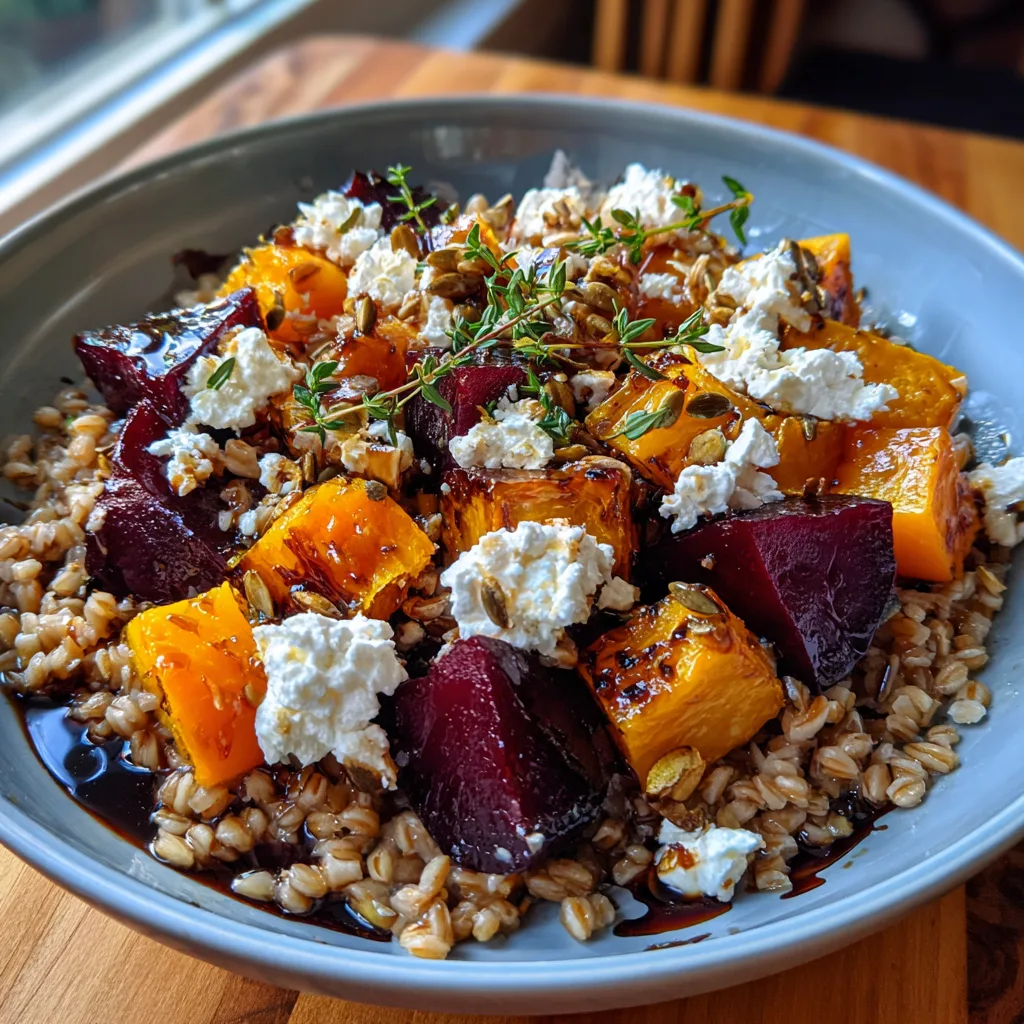
Autumn Harvest Farro Bowl
The Ultimate Roasted Beet and Butternut Squash Farro Bowl
When the weather begins to cool and the days grow shorter, our bodies naturally start craving heartier, more grounding foods. Salads made of delicate summer greens suddenly seem less appealing, replaced by the desire for warm, deeply flavorful, and satisfying meals. This is exactly where the Ultimate Roasted Beet and Butternut Squash Farro Bowl enters the picture. This recipe is not just a salad; it is a celebration of autumn and winter harvests, combining earthy root vegetables, chewy ancient grains, tangy cheese, and a satisfying crunch. It is the kind of dish that makes you feel nourished from the inside out, providing a perfect balance of complex carbohydrates, healthy fats, and vibrant, colorful vegetables.
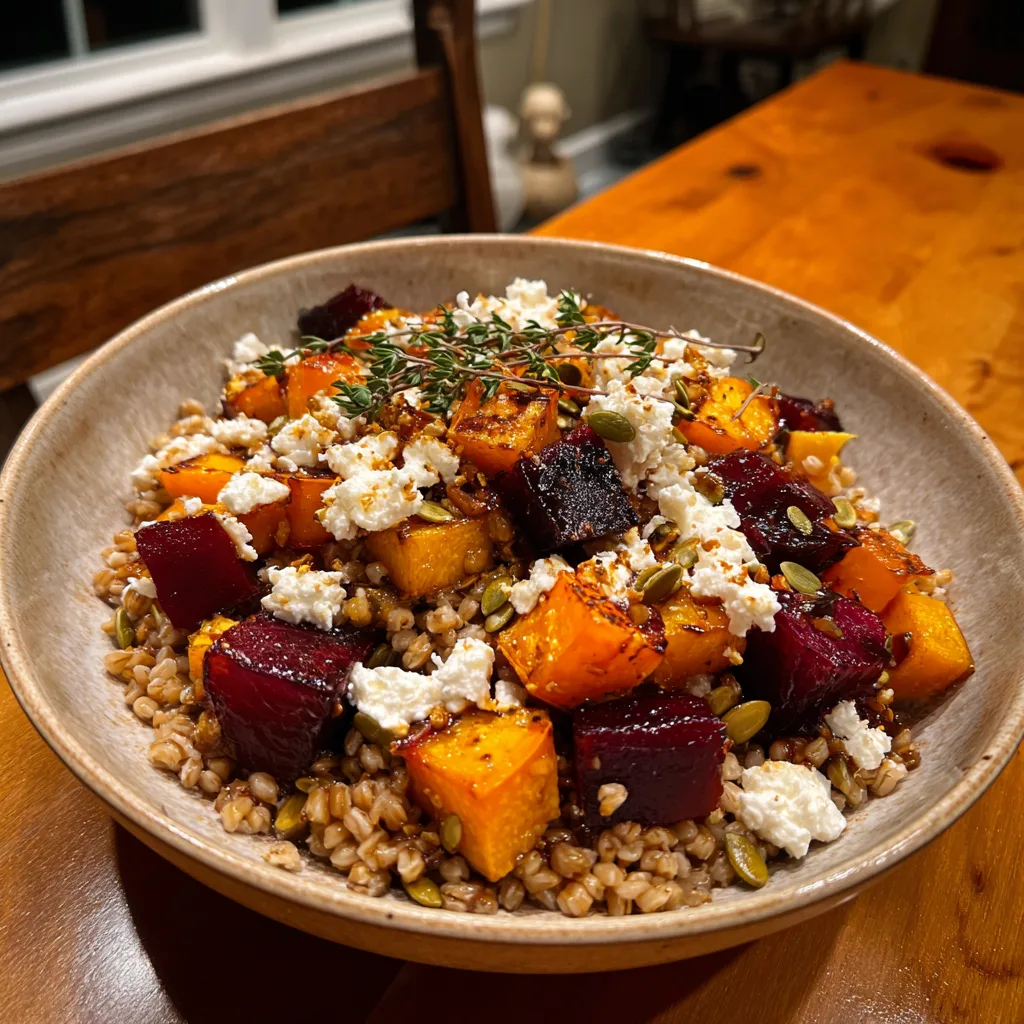
Whether you are looking for a show-stopping vegetarian main course for a holiday gathering, a reliable and healthy meal prep option for busy work weeks, or simply a comforting weeknight dinner, this grain bowl delivers on all fronts. It is visually stunning, with jewel-toned reds and bright oranges popping against the rustic brown grains, but more importantly, every single bite is packed with layers of sweet, savory, and tangy flavors.
Why You Will Fall in Love with This Grain Bowl
There are countless reasons to add this spectacular dish to your regular meal rotation. Here is why this specific combination of ingredients is pure magic:
- Incredible Textural Contrast: A great dish requires a variety of textures to keep your palate engaged. Here, you have the chewy, satisfying bite of the farro, the tender, melt-in-your-mouth creaminess of the roasted vegetables, the creamy crumble of the feta, and the crisp, nutty crunch of the toasted pepitas.
- Nutrient-Dense Powerhouse: This bowl is a nutritional dream. Beets are loaded with essential vitamins, minerals, and plant compounds, while butternut squash offers massive amounts of vitamin A and fiber. Farro is a complex carbohydrate that keeps you full for hours without a sugar crash.
- Perfect for Meal Prep: Unlike leafy green salads that wilt into a sad, soggy mess within hours of dressing them, this robust grain bowl actually improves as it sits. The grains soak up the flavors of the dressing and the roasted vegetables, making it a perfect make-ahead lunch for the week.
- Flavor Harmony: The natural, caramelized sweetness of the beets and squash is perfectly offset by the salty, briny bite of the feta cheese and the acidic tang of a balsamic vinaigrette.
- Adaptable and Forgiving: Grain bowls are essentially templates. If you are missing an ingredient, it is incredibly easy to swap it out for something else in your pantry, making it a highly sustainable way to cook.
The Magic of Farro: An Ancient Grain Revival
At the base of this spectacular dish lies farro, an ancient wheat grain that has sustained civilizations for thousands of years. Originating in the Fertile Crescent, farro was a staple in the diet of the Roman legions. In recent years, it has seen a massive resurgence in modern kitchens, and for good reason.
Farro has a distinct, nutty flavor that is much richer and more complex than white rice or even quinoa. More importantly, its texture is unmatched. When cooked properly, farro retains a slightly firm, chewy bite—often referred to as “al dente” in pasta terms—that holds up beautifully against heavy, wet ingredients like roasted vegetables and dressings. Nutritionally, it is a fantastic source of plant-based protein, dietary fiber, magnesium, and iron. It is important to note that because farro is a type of wheat, it does contain gluten and is not suitable for those with celiac disease.
Ingredient Spotlight: Choosing the Best Produce
Because this recipe relies heavily on whole foods, the quality of your ingredients will directly impact the final flavor. Here is what to look for when shopping:
The Beets: You can use standard red beets, which offer that classic deep, earthy flavor and stunning crimson color. If you prefer a milder, sweeter flavor (or just want to avoid the pink staining that red beets are famous for), golden beets are an exceptional substitute. Look for beets that are firm to the touch with smooth skin; soft or wrinkled beets are past their prime.
The Butternut Squash: Choose a squash that feels heavy for its size. The skin should be matte and hard, without any deep cuts or soft, bruised spots. If you want to save time, many grocery stores sell pre-peeled and cubed butternut squash, which is a fantastic shortcut for busy weeknights.
The Cheese: A high-quality feta cheese stored in brine will have a much better texture and flavor than pre-crumbled feta, which is often coated in anti-caking agents that make it dry. Goat cheese (chèvre) is also a phenomenal alternative, offering a slightly more earthy and creamy profile that pairs beautifully with the beets.
The Crunch: Pepitas (raw pumpkin seeds) offer a perfect, subtle crunch. Toasting them briefly in a dry skillet dramatically enhances their nutty flavor. You could also use toasted walnuts or pecans if you prefer.
Essential Ingredients
Gather these ingredients before you begin to ensure a smooth cooking process.
- – 1 cup semi-pearled farro, rinsed
- – 3 cups vegetable broth or water (for cooking farro)
- – 1 medium butternut squash, peeled, seeded, and cubed (about 3 cups)
- – 3 medium red beets, peeled and cubed
- – 4 tablespoons extra virgin olive oil, divided
- – 1 teaspoon kosher salt, plus more to taste
- – 1/2 teaspoon freshly cracked black pepper
- – 1/2 cup crumbled feta cheese
- – 1/3 cup pepitas (pumpkin seeds), toasted
- – Fresh thyme sprigs, for garnish
- – 2 tablespoons balsamic vinegar
- – 1 teaspoon Dijon mustard
- – 1 teaspoon honey or maple syrup
- – 1 clove garlic, finely minced
Step-by-Step Instructions
Follow these detailed steps to build your magnificent grain bowl. Timing is key; getting the vegetables roasting while the farro cooks is the best way to utilize your time in the kitchen.
- Preheat the Oven: Preheat your oven to 400°F (200°C). Position your oven racks in the middle and lower-middle positions. Line two large baking sheets with parchment paper or silicone baking mats. Using two sheets is crucial; crowding the vegetables will cause them to steam rather than roast.
- Prepare the Vegetables: Carefully peel the butternut squash and scoop out the seeds, then cut it into uniform 1-inch cubes. Peel the beets and cut them into similar 1-inch cubes. Pro tip: Keep the beets and squash separate to prevent the red beet juice from staining the orange squash before cooking.
- Season and Roast: Place the cubed butternut squash on one baking sheet and the cubed beets on the other. Drizzle each sheet with 1 tablespoon of olive oil. Season generously with kosher salt and black pepper. Toss the vegetables until they are completely coated. Spread them out in a single, even layer. Roast in the preheated oven for 30 to 40 minutes, tossing halfway through, until they are fork-tender and nicely caramelized on the edges.
- Cook the Farro: While the vegetables are roasting, place the rinsed farro in a medium saucepan. Add the vegetable broth (or water) and a pinch of salt. Bring to a rolling boil over high heat. Once boiling, reduce the heat to low, cover the pot, and let it simmer for 25 to 30 minutes. The farro is done when it is tender but still has a distinct chewy bite. Drain any excess liquid if necessary, and transfer the farro to a large serving bowl.
- Whisk the Dressing: In a small mason jar or a small mixing bowl, combine the balsamic vinegar, Dijon mustard, honey (or maple syrup), minced garlic, and the remaining 2 tablespoons of extra virgin olive oil. Whisk vigorously (or shake the jar) until the dressing is fully emulsified and slightly thickened. Season with a pinch of salt and pepper to taste.
- Assemble the Bowl: Once the roasted vegetables are finished and slightly cooled, add them directly to the large bowl with the warm farro. Drizzle the balsamic vinaigrette over the top and gently toss everything together until the grains and vegetables are evenly coated.
- Garnish and Serve: Top the bowl with the crumbled feta cheese and the toasted pepitas. Garnish with a few sprigs of fresh thyme. Serve warm or at room temperature.
Mastering the Art of Roasting Root Vegetables
Roasting seems simple, but there is a science to getting those perfectly caramelized, slightly crispy edges while maintaining a tender interior. The secret lies in the Maillard reaction, a chemical reaction between amino acids and reducing sugars that gives browned food its distinctive flavor.
To encourage this reaction, heat is your best friend. A 400°F (200°C) oven is the sweet spot. If the temperature is too low, the vegetables will simply bake and become mushy. If it is too high, the outside will burn before the inside is cooked through. Furthermore, you must respect the space on your baking sheet. Moisture is the enemy of browning. If you pile the vegetables on top of each other, they will release their water content and steam each other. Give them room to breathe! Finally, tossing them in oil is non-negotiable; fat conducts heat much more efficiently than air, helping the vegetables roast evenly.
The “Beet Bleed” Dilemma
Anyone who has cooked with red beets knows they tend to turn everything they touch into a vibrant shade of magenta. While this color is beautiful, you might not want your farro and butternut squash to be completely dyed pink.
To mitigate the “beet bleed,” roast the beets on a separate pan, as instructed in the recipe. Furthermore, when assembling the final dish, do not toss the beets aggressively with the rest of the ingredients. Instead, gently fold them in at the very end, or simply place them on top of the tossed grains and squash right before serving. Alternatively, as mentioned earlier, substituting golden beets will eliminate this issue entirely while providing a similar earthy sweetness.
Recipe Variations and Substitutions
This recipe is highly adaptable. Feel free to tweak it based on your dietary needs or what you have languishing in the crisper drawer.
Grain Swaps: If you cannot find farro or require a gluten-free option, quinoa is an excellent, protein-packed substitute. Brown rice, wild rice, or chewy pearl barley also work beautifully in this exact format.
Vegetable Additions: Want more greens? Massage a few handfuls of chopped kale with olive oil and stir them into the warm farro before adding the roasted root vegetables. Roasted Brussels sprouts or caramelized red onions would also be incredible additions to the flavor profile.
Protein Boosts: To make this an even more substantial main course, add a can of rinsed and drained chickpeas to the roasting pan for the last 15 minutes of cooking. Sliced grilled chicken breast or baked salmon also pair perfectly with these autumn flavors.
Vegan Adaptations: To make this bowl 100% vegan, simply omit the feta cheese (or substitute it with a plant-based feta alternative) and ensure you are using maple syrup instead of honey in the dressing.
Meal Prep and Storage Guide
This roasted beet and butternut squash farro bowl is a meal prepper’s dream come true. Because farro is a sturdy grain, it doesn’t get mushy in the fridge, and the root vegetables hold their shape wonderfully.
Store any leftovers in an airtight container in the refrigerator for up to 4 or 5 days. For the best meal prep experience, you might want to store the crumbled cheese and pepitas in separate, small containers and add them just before eating, to preserve the maximum crunch of the seeds and the freshness of the cheese. This bowl is delicious cold, straight from the fridge, but if you prefer it warm, a quick 60 seconds in the microwave is all it takes. Just remember to add the cheese and seeds after heating.
Frequently Asked Questions (FAQ)
Do I need to soak the farro before cooking?
It depends on the type of farro you buy. Pearled or semi-pearled farro (the most common types found in grocery stores) have part or all of the bran removed and do not require soaking; they cook in about 25-30 minutes. If you buy “whole” farro, soaking it overnight will significantly reduce the cooking time.
Can I freeze this dish?
While you can technically freeze cooked farro and roasted vegetables, the texture of the vegetables (especially the squash) will become significantly softer and slightly mushy upon thawing. It is highly recommended to enjoy this dish fresh or within the 5-day refrigerator window.
My dressing separated, is it ruined?
Not at all! Vinaigrettes naturally separate as they sit because oil and vinegar do not inherently want to mix. Simply give the jar another vigorous shake or whisk it briskly before pouring it over your grains.
The Culinary History of Root Vegetables
The components of this bowl have deep historical roots. Root vegetables like beets were cultivated in the ancient Middle East, initially grown primarily for their leafy greens rather than the bulbous root we eat today. It wasn’t until the Roman era that the sweet, earthy roots became highly prized. Before sugar cane became widely available, beets were actually one of the primary sources of sweetness in European diets.
Butternut squash, on the other hand, is a relatively modern invention. It was developed in the 1940s in Massachusetts by crossing a gooseneck squash with other varieties to create a manageable size, smooth skin (making it easier to peel), and sweet, dense flesh. Combining these Old World and New World ingredients in a single bowl represents a beautiful convergence of global agricultural history.
Conclusion
The Ultimate Roasted Beet and Butternut Squash Farro Bowl is a testament to the fact that healthy eating does not have to be boring or bland. By combining the chewy, nutty depth of ancient grains with the caramelized sweetness of roasted fall vegetables, the sharp tang of feta, and a zesty balsamic dressing, you create a symphony of flavors that is guaranteed to satisfy. Take the time to roast the vegetables to perfection, cook the farro until just chewy, and enjoy a bowl of pure, autumnal comfort.
Roasted Beet and Butternut Squash Farro Bowl
Ingredients
Equipment
Method
- Preheat oven to 400°F (200°C). Line two baking sheets with parchment paper.
- Place butternut squash cubes on one sheet and beet cubes on the other. Drizzle each with 1 tablespoon olive oil, salt, and pepper. Toss to coat.
- Roast vegetables for 30-40 minutes, tossing halfway through, until fork-tender and slightly caramelized.
- While vegetables roast, bring broth or water to a boil in a saucepan. Add rinsed farro, reduce heat to low, cover, and simmer for 25-30 minutes until chewy and tender. Drain excess liquid.
- In a small jar or bowl, whisk together balsamic vinegar, 2 tablespoons olive oil, Dijon mustard, honey, and minced garlic to make the dressing.
- In a large serving bowl, gently toss the warm farro, roasted butternut squash, and beets together with the balsamic dressing.
- Top the bowl with crumbled feta cheese and toasted pepitas. Garnish with fresh thyme sprigs and serve.