Caramelized Onion Chilli Pasta
The Ultimate Comfort Food: Caramelized Onion Pasta with Chilli Oil
There is a profound, almost magical alchemy that occurs when humble, everyday pantry staples are given time, patience, and a little bit of heat. In the vast and varied world of culinary creations, few dishes exemplify this transformation quite like Caramelized Onion Pasta with Chilli Oil. This dish is a masterclass in flavor building, relying not on expensive cuts of meat or hard-to-find truffles, but on the deep, intrinsic flavors locked inside the common yellow onion and the fiery, complex heat of good quality chili oil. It is a recipe born out of necessity and craving—the kind of meal you conjure up on a Tuesday night when the refrigerator is bare but your desire for something deeply savory, satisfying, and slightly indulgent is at an all-time high.
Pasta, in its many forms, is the ultimate canvas for flavor. It is comforting, texturally satisfying, and incredibly versatile. But when you move away from the traditional tomato-based marinara or the heavy, cream-laden Alfredo sauces, you open yourself up to a world of slick, glossy, oil-based sauces that coat every individual strand of pasta with intense flavor. This recipe leans heavily into the Asian-Italian fusion space, borrowing the technique of emulsifying pasta water from classic Italian aglio e olio, and marrying it with the sweet, jammy umami of deeply cooked onions and the bold, mouth-tingling spice of Asian-style chili crisp oil. The result is a bowl of noodles that is simultaneously sweet, spicy, salty, and incredibly savory. It hits every single craving center on your palate.
Whether you are a seasoned home chef looking for a reliable, low-effort weeknight staple, or a college student trying to elevate your instant ramen game by transitioning to real pasta, this Caramelized Onion Pasta with Chilli Oil is guaranteed to become a permanent fixture in your culinary rotation. Let us delve deep into the mechanics of this dish, exploring the science of caramelization, the nuances of chili oil, and the foolproof techniques required to bring it all together into a glossy, restaurant-quality bowl of comfort.
The Magic of Caramelization: Patience is a Virtue
At the absolute heart of this dish lies the caramelized onion. It is crucial to understand that caramelizing onions is not simply browning them or sautéing them until they are soft. True caramelization is a chemical process—specifically, the pyrolysis of naturally occurring sugars within the onion, combined with the Maillard reaction, which browns the amino acids. When you subject raw, pungent, sharp onions to low, consistent heat over an extended period, their cellular structure breaks down. The harsh sulfur compounds that make your eyes water evaporate, and the complex starches convert into simple sugars.
These sugars then cook, turning a deep, rich mahogany color and developing a flavor profile that is intensely sweet, savory, and slightly nutty. This process cannot be rushed. If you turn the heat up too high, the onions will fry and burn, resulting in a bitter taste that will ruin the entire dish. To achieve the perfect jammy consistency required for this pasta, you must be prepared to stand by the stove for at least thirty to forty minutes. It requires occasional stirring, a watchful eye, and the willingness to add a splash of water if the onions begin to stick to the pan. The reward for your patience is a thick, deeply flavored onion jam that forms the sweet backbone of this entire recipe, perfectly counterbalancing the aggressive heat of the chili oil.
The Kick: Understanding Chilli Oil in Pasta
While the caramelized onions provide the sweet, grounding base, the chili oil brings the dish to life. Chili oil is not just a condiment; in this recipe, it acts as a primary flavoring agent and the liquid medium that, when combined with starchy pasta water, creates the sauce. Not all chili oils are created equal, and the type you choose will drastically alter the final flavor profile of your pasta.
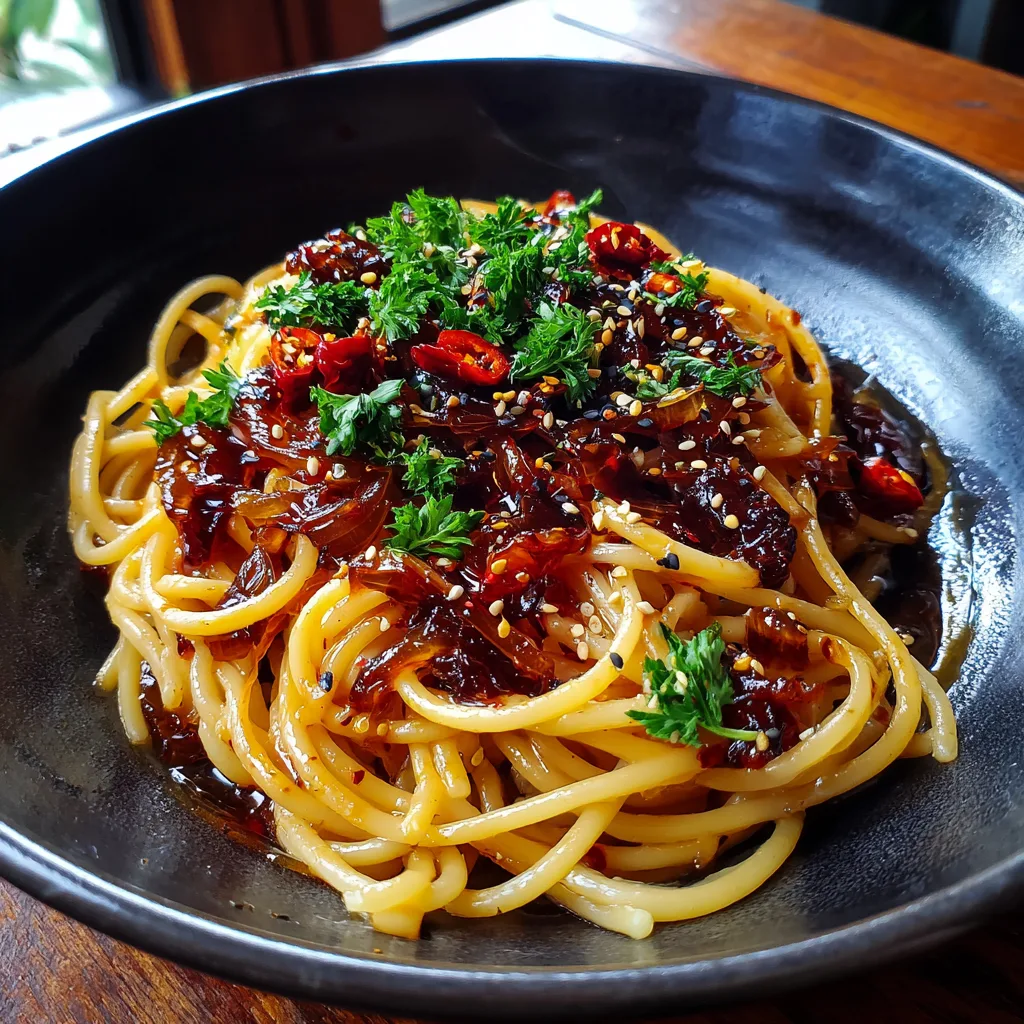
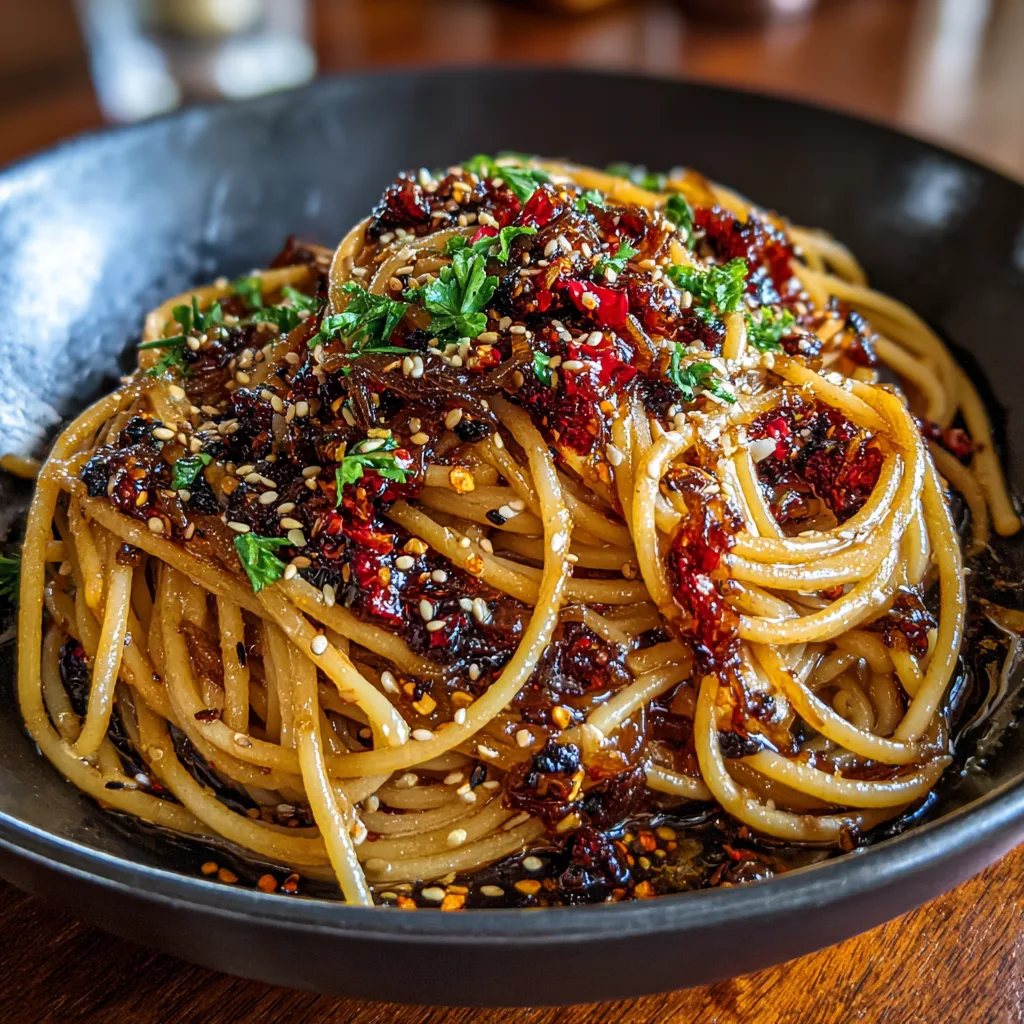
For the best textural and flavor experience, you should seek out a chili crisp or a chili oil that contains plenty of sediment—roasted chili flakes, garlic bits, sesame seeds, and perhaps even fermented soybeans or peanuts. This type of oil offers a multi-dimensional heat. It is not just about raw spiciness; it is about toasted, smoky, and deeply savory notes. When the hot pasta is tossed in this oil, the heat awakens the aromatics, releasing a fragrance that is instantly mouth-watering. The fiery red oil stains the pasta beautifully, while the crispy bits cling to the noodles, providing a delightful textural contrast to the soft, slippery spaghetti and the jammy onions. The interplay between the sweet onions and the spicy oil creates a dynamic tension on the palate that keeps you coming back for another bite.
Essential Ingredients for the Perfect Bowl
Because this recipe relies on so few ingredients, the quality of what you put into the pan is paramount. Here is what you need to create this masterpiece:
- – 1 lb (450g) long pasta (spaghetti, linguine, or bucatini work best as the oil clings to them beautifully)
- – 3 large yellow onions (thinly sliced from root to stem; they will cook down significantly)
- – 3 tbsp extra virgin olive oil (for slowly cooking the onions)
- – 2 tbsp unsalted butter (adds a rich, creamy finish to the onions)
- – 3 to 4 tbsp high-quality chili crisp or chili oil (adjust according to your heat tolerance)
- – 4 cloves fresh garlic (finely minced)
- – 1/2 cup reserved starchy pasta water (crucial for emulsifying the sauce)
- – 1 tbsp dark soy sauce (adds depth of color and an umami saltiness)
- – 1 tsp balsamic vinegar (used at the end to deglaze and add a touch of acidity)
- – 1/4 cup fresh parsley (finely chopped, to cut through the richness)
- – 1 tbsp toasted white sesame seeds (for garnish and slight crunch)
- – Coarse black pepper and kosher salt to taste
Step-by-Step Instructions
Creating this dish is an exercise in timing. You want your pasta to finish cooking just as your onion and chili oil base reaches its flavorful peak. Follow these steps for perfect execution:
- Begin the Caramelization Process: Place a large, heavy-bottomed skillet or Dutch oven over medium-low heat. Add the olive oil and the sliced onions. Toss the onions to coat them in the oil. Cook them slowly, stirring every 5 minutes. After about 15 minutes, when they are soft and translucent, add a generous pinch of salt. This draws out the moisture and helps them brown evenly.
- Develop the Color: Continue cooking the onions for another 20 to 25 minutes. If they start to dry out or stick to the bottom of the pan, add a tablespoon of water to deglaze and scrape up the browned bits. You are looking for a deep, rich, golden-brown color and a soft, jam-like texture.
- Boil the Pasta: While the onions are in their final 15 minutes of caramelization, bring a large pot of heavily salted water to a rolling boil. Add your spaghetti or linguine and cook according to the package instructions until it is just shy of al dente. It will finish cooking in the sauce.
- Aromatics and Umami: Once the onions are fully caramelized, push them to the edges of the skillet. Drop the unsalted butter into the center of the pan. Once melted, add the minced garlic. Sauté the garlic for exactly one minute until fragrant, being careful not to let it brown. Stir the garlic and butter into the caramelized onions.
- Build the Sauce Base: Pour the dark soy sauce, balsamic vinegar, and the chili crisp oil into the onion mixture. Stir thoroughly to combine. The mixture will look dark, oily, and intensely aromatic.
- Emulsify and Toss: Before draining your pasta, carefully scoop out about 1/2 cup of the starchy pasta cooking water. Drain the pasta and immediately add the hot noodles directly into the skillet with the onion and chili oil mixture. Pour in 1/4 cup of the reserved pasta water.
- The Vigorous Stir: Using tongs, vigorously toss the pasta in the pan over medium heat. The starches in the pasta water will mix with the chili oil and butter to create a glossy, thick sauce that clings perfectly to every single noodle. If the pasta looks too dry, add the remaining pasta water a splash at a time until the desired consistency is reached.
- Garnish and Serve: Remove the skillet from the heat. Toss in the freshly chopped parsley and a generous grating of coarse black pepper. Transfer the glistening pasta to individual serving bowls, ensuring you scrape out every last bit of the caramelized onion jam from the pan. Top with toasted sesame seeds and an extra drizzle of chili oil if you dare. Serve immediately.
Pro Tips for Pasta Perfection
To truly master this dish and achieve that restaurant-quality gloss, you must understand the art of emulsification. Oil and water naturally repel each other. If you simply pour oil over boiled pasta, you will end up with a greasy, slippery mess at the bottom of your bowl. The secret is the pasta water.
As pasta boils, it releases starches into the water. When you add this starchy water to the hot oil in your skillet and agitate it violently by tossing the noodles, the starch acts as a binding agent. It forces the fat molecules from the chili oil and butter to suspend within the water molecules, creating a creamy, opaque, unified sauce. This is why you must never rinse your pasta after boiling it, and why you must vigorously toss the pasta in the pan rather than just gently stirring it. The friction and heat are what build the sauce.
Furthermore, do not skimp on the salt in your pasta water. It should taste like the sea. Because there is no heavy, reduced sauce simmering for hours, the pasta itself must be perfectly seasoned from the inside out. The salt in the water penetrates the noodle as it expands and cooks, ensuring that every bite is deeply flavorful.
Exciting Variations and Customizations
While this recipe is phenomenal in its vegetarian form, it serves as an incredibly versatile base for a multitude of additions. You can easily customize it to utilize whatever leftover proteins or vegetables you have lingering in your refrigerator.
Add Protein: This dish welcomes protein beautifully. For a seafood twist, toss in some raw, peeled shrimp during the last three minutes of the pasta tossing stage; the residual heat will cook them perfectly. Alternatively, sliced grilled chicken breast or crispy pan-fried tofu cubes make fantastic additions that soak up the spicy, sweet oil.
The Cheesy Route: Although combining Asian chili crisp with Italian cheese might sound unorthodox, a heavy dusting of freshly grated Parmigiano-Reggiano or Pecorino Romano adds an incredible layer of salty, nutty umami that pairs beautifully with the sweet onions. The cheese also helps to further thicken and emulsify the sauce.
Green Additions: If you want to cut through the richness of the dish with some fresh vegetables, try folding in a few handfuls of fresh baby spinach or arugula right before serving. The heat of the pasta will wilt the greens slightly, adding vibrant color and a peppery bite. Steamed broccoli florets or blanched snap peas also offer a great textural crunch.
Serving Suggestions and Pairings
Because this Caramelized Onion Pasta with Chilli Oil is so intensely flavored and rich, it demands side dishes that are bright, acidic, and refreshing. A crisp, bitter green salad made with radicchio, endive, and a sharp lemon vinaigrette is the perfect palate cleanser between bites of the spicy, savory noodles.
If you are serving this for a dinner party, a side of crusty, toasted sourdough bread is essential for mopping up any leftover spicy onion oil pooling at the bottom of the bowl. When it comes to beverages, the heat of the chili oil pairs wonderfully with an ice-cold, crisp lager beer. If you prefer wine, opt for something with a hint of residual sweetness to counteract the spice, such as an off-dry Riesling or a chilled, fruity Pinot Grigio.
Frequently Asked Questions
Can I make the caramelized onions ahead of time?
Absolutely. In fact, making a large batch of caramelized onions on the weekend is a fantastic meal-prep hack. You can store the cooked onions in an airtight container in the refrigerator for up to a week, or freeze them for several months. When you are ready to make the pasta, simply warm the onions in the skillet, add the garlic and chili oil, and proceed with the recipe. This reduces the total cooking time of the dish to roughly 15 minutes.
What kind of onions work best for this recipe?
Standard yellow onions are the gold standard for caramelization. They have the perfect balance of moisture and natural sugars to break down beautifully into a sweet jam. White onions can be used, but they are slightly sharper and take a bit longer to mellow out. Red onions will work and offer a stunning dark purple color, but their flavor is slightly less sweet than yellow onions. Sweet onions (like Vidalia) contain a lot of water and will take longer to cook down, but result in an incredibly sweet final product.
My pasta is too spicy. How can I fix it?
If you overestimated your heat tolerance, do not panic. The easiest way to temper the spice is to add a source of dairy. A dollop of plain Greek yogurt, sour cream, or a splash of heavy cream stirred into the noodles will immediately cool down the capsaicin. Alternatively, adding a little more sweetness, such as an extra teaspoon of balsamic vinegar or even a tiny pinch of brown sugar, can help balance the aggressive heat.
Embrace the slow magic of caramelization and the fiery thrill of chili crisp. This Caramelized Onion Pasta with Chilli Oil is a testament to the power of pantry staples, proving that with a little technique, you can create a meal that is profoundly comforting, deeply flavorful, and entirely unforgettable.
Caramelized Onion Pasta with Chilli Oil
Ingredients
Equipment
Method
- Heat olive oil in a large skillet over medium-low heat. Add sliced onions and toss to coat.
- Cook onions slowly, stirring occasionally, for 30-40 minutes until they are deeply browned, soft, and caramelized. Add a pinch of salt halfway through.
- While onions finish caramelizing, boil pasta in heavily salted water until just shy of al dente. Reserve 1/2 cup of starchy pasta water before draining.
- Push caramelized onions to the edge of the skillet. Add butter and minced garlic to the center. Sauté garlic for 1 minute until fragrant.
- Stir the garlic, soy sauce, balsamic vinegar, and chili oil into the onions to create the sauce base.
- Add the hot drained pasta directly into the skillet along with 1/4 cup of the reserved pasta water.
- Toss vigorously over medium heat until the starchy water and oils emulsify into a glossy sauce that coats the noodles. Add more pasta water if needed.
- Remove from heat. Garnish with chopped parsley, coarse black pepper, and toasted sesame seeds. Serve immediately.